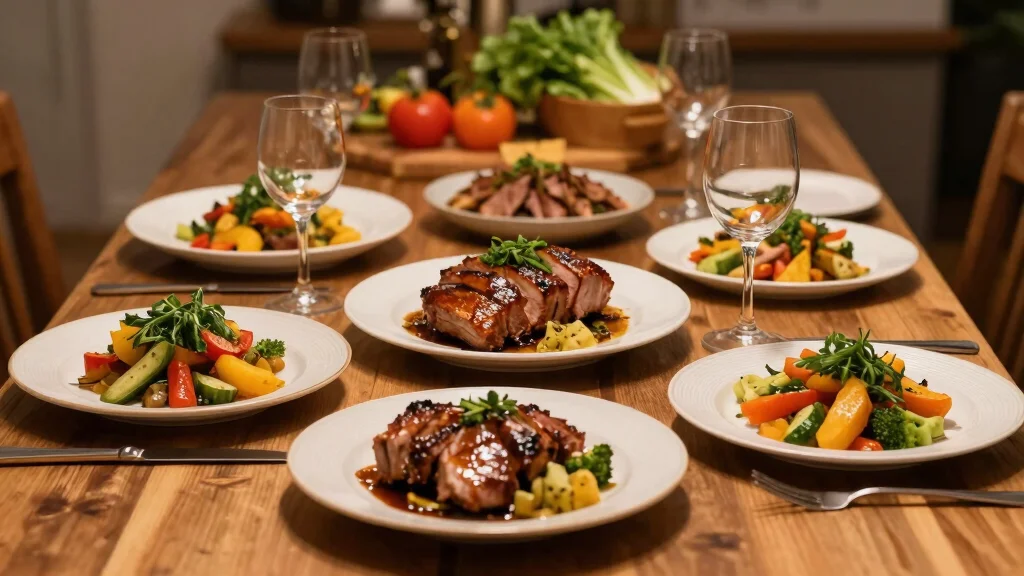

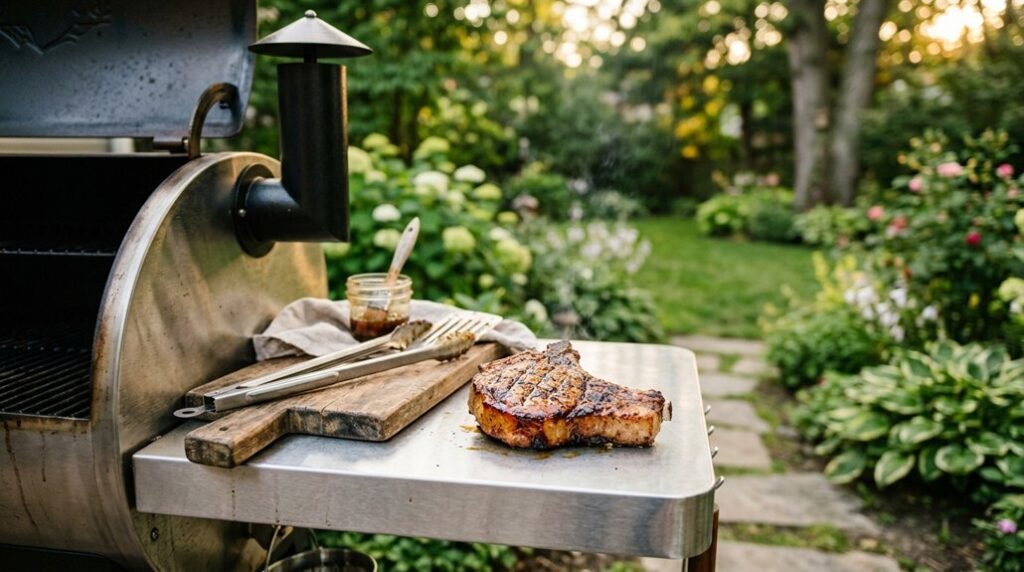


You fire up your pellet grill to 225°F, and you’re already ahead of most home cooks who rush the preheat. Those 10–15 minutes of waiting, that patience, it pays off big time.
Your pork chops need this low, steady smoke, the kind that pecan or apple pellets deliver, that sweet, mellow flavor you can’t fake with liquid smoke.
You’ll run them 45 to 60 minutes until they hit around 100°F inside, then you crank that baby to 425°F and sear. Two to three minutes per side, that’s all.
Pull at 145°F, no higher, because pink pork is safe and juicy beats gray every single time.
Thickness changes everything here: a one-inch chop might smoke 30 minutes, a two-inch brute needs 90. Without a thermometer, you’re guessing, and guessing wastes good meat.
Rest them 10 minutes, let those juices settle.
The weird thing, the part nobody tells you, is how many people overcook pork because they’re scared of trichinosis from 1950. That fear ruins dinner.
But there’s a trick for dryness, a butter baste you can slap on late, and it saves even the most abused chop.
What surprises me is how few pellet grill owners use the full two-stage method; they want one temp, one time, done. That’s steak thinking, and pork laughs at steak thinking.
Your pellet grill gives you precision, so use it.
Now, about that brine you skipped last night, the one that separates restaurant pork from your neighbor’s chewy disaster, you can still dry rub now and rescue this.
But will it be enough?
Brine Overnight: or Start Now With a Dry Rub
Your first big decision: overnight brine or right-now rub? If you want the juiciest smoked pork chops, you’ll brine pork chops the night before. Dissolve 1/4 cup kosher salt in 2 cups heated water, cool it completely, then toss in ice, ginger ale, and aromatics like bay leaves. Submerge those chops for 6–24 hours. The salt reshapes proteins so they lock in moisture during low and slow cooking.
After brining, you’ll pat them bone-dry, coat with oil, and rub evenly. Skipping the brine? You can dry rub now, but watch that salt, or you’ll wreck the flavor. Either way, grab your meat thermometer. You’re aiming for 145°F internal, no exceptions.
Recommended Products

COMPATIBILITY: Meat probe is only compatible with Pit Boss wood pellet grills and smokers. NOTE: The probe NOT FIT FOR Treager, Camp Chef, Masterbuilt, Char-Grill, Therm Pro. Please ensure your grill and confirm that the model is compatible

The smoker thermastat, bbq thermometer gauge has a 13/16" mounting hole for 1/2 NPT inserting on the grill lid. Thermometer gauge Replacement for all Oklahoma Joe's grills, and Masterbuilt, Pit Boss, Char-Griller, Dyna-Glo, Charbroil and most smoker grills. BBQ pit thermometer gauge replacement parts for oklahoma joes smoker thermometer, oklahoma joe smoker thermometer, oklahoma joe smoker accessories.

BBQ / Grill pit thermometer, safe and environmentally friendly.
Fire Up: 225°F With Apple or Pecan Pellets
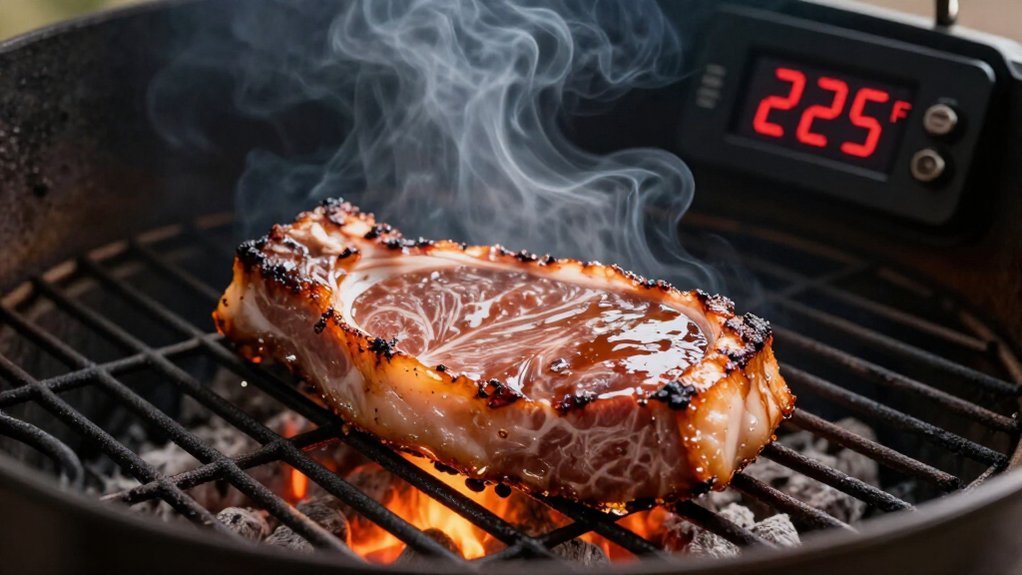
Most pellet grills need a solid 10–15 minutes to hit 225°F, so don’t rush it. You want that grill temperature rock-steady before the pork ever touches grates, or your timing goes sideways real fast.
For smoke pork chops, apple pellet is your gentle friend: light, fruity, barely sweet. Pecan’s nuttier, a bit bolder; both play nice with pork without bullying it.
Either way, 225°F is your sweet spot for soaking up flavor while staying juicy, especially if your chops are around an inch thick. Thinner cuts dry out, thicker ones take forever, so one inch hits that goldilocks zone.
Patience here pays off. Stable heat means predictable cooking, and predictable cooking means you control the outcome, not the other way around.
Recommended Products

APPLE WOOD FIRED FLAVOR: With Traeger Apple Hardwood Pellets, naturally enhance baked goods, chicken, and pork with a subtly sweet, fruity flavor.

100% Pecan Shell Pellets - Pellets For BBQ Smoker

100% all-natural premium hardwood food grade pellets works with Camp Chef, Traeger, Green Mountain, and Many other grills
Smoke 45–60 Minutes Until Internal Hits 100°F
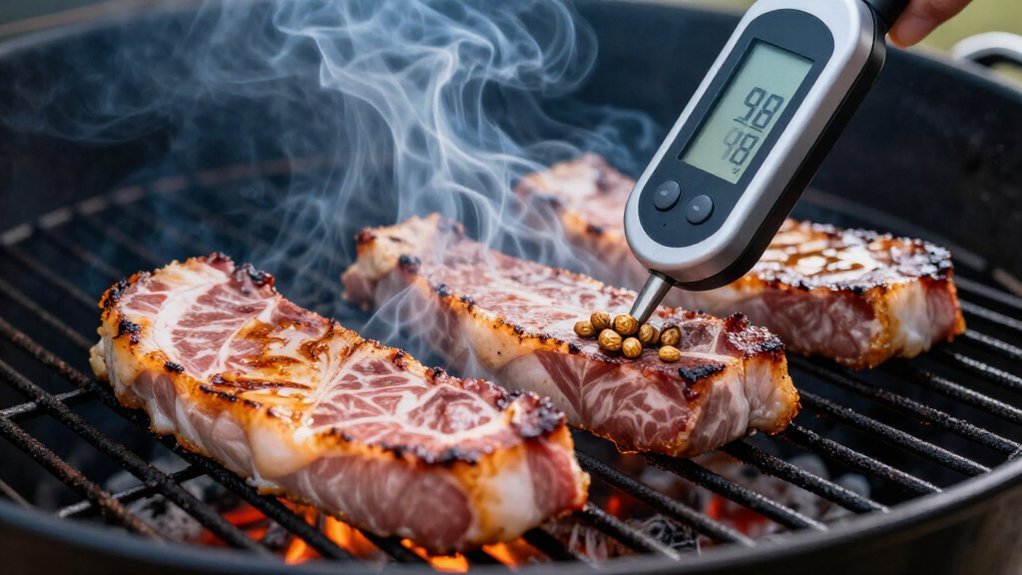
Load those chops onto the grates once your grill’s sitting pretty at 225°F, bone side down if you’ve got ’em. You’ll smoke these babies for 45 to 60 minutes, but here’s the truth: time alone won’t cut it. Grab a reliable thermometer and slide that probe into the thickest part, steering clear of bone. You’re watching for the internal temperature to reach about 100°F.
Thinner chops might surprise you and hit that mark faster, so check early. Missing that target by the end of your window means you’re stuck waiting longer at 225°F, which frankly stinks. This low-and-slow phase builds deep flavor and a great crust. Once you hit 100°F, you’re good to move forward. Patience now pays off big later.
Recommended Products

【A PERFECT FIT FOR PELLET GRILLS】- Designed specifically for your pellet grill, these grill grates rest on top of your existing grill surface, enhancing performance and cooking results. Set Includes: (3) 15″ Panels Assembled Dimensions: 15” Deep by 15.375” Wide

Pit Boss Mahogany Series 440 Wood Pellet Grill and Smoker

AMERICA’S TEST KITCHEN BEST CHARCOAL GRILL ACCESSORY (2021): The Slow ‘N Sear is the only charcoal basket independently tested and ranked #1 by America’s Test Kitchen. No advertising, no paid placement — just head-to-head testing against every competitor on the market. SnS Grills' products are backed by 11 patents, no imitation can replicate the engineering that earned that recognition.
Crank to 425°F and Sear 2–3 Minutes Per Side
Once those chops hit 100°F and you’ve pulled them off, bump your pellet grill up to a blistering 425°F. This is where the Reverse Sear shines: you’ve already cooked them gently, so now you’ll finish with fire.
Pat those chops bone-dry first. Wet meat steams instead of browns, and nobody wants sad, gray pork. When your pellet grill hits temperature, lay them down and sear 2–3 minutes per side. That’s it. Watch them closely; this stage moves fast. You’re building a caramelized crust without nuking the center, which is already warm and waiting.
The fat sizzles, the edges crisp, and you get that steakhouse look without the steakhouse bill. Flip once, trust the timing, smell the Maillard reaction working. You’re almost there.
Recommended Products
Chef-Mastered Moisture Retention – Our premium crystal salt acts at the molecular level to help retain up to ~30-40% more moisture in proteins like turkey, chicken and...
Pull at 145°F (Pink Inside Is Perfectly Safe)
That sear’s got your chops looking gorgeous, but don’t let good looks fool you into pulling them too early. You need to hit 145°F, no exceptions. Stick that thermometer right into the thickest part, away from bone, and wait for the magic number. Don’t freak if they’re still pink inside: that’s exactly where you want them, perfectly safe and way juicier than the dry gray pork your grandma tolerated.
For thick pork chops, you’re probably looking at 60–90 minutes total, so patience pays off. Remove the pork chops the instant you read 145°F, trusting your tools over your eyes. Plan to rest for 10 minutes after pulling, letting carryover cooking finish the job without losing moisture.
Recommended Products

One bone-in pork loin center-cut chops weighing 0.45 and 1 pound

One bone-in pork loin center-cut chops weighing 0.45 and 1 pound

One boneless pork loin center-cut chops weighing between 0.5 and 1.5 pounds
Rest 10 Minutes Before Cutting
Once you’ve pulled those chops at 145°F, you’ll want to let them rest for about ten minutes, and trust me, this wait matters more than most people think. That pause lets carryover cooking push the internal temp just right while the juices, which got all agitated from the heat, settle back evenly through the meat instead of pooling on your cutting board.
Tent them loosely with foil so they don’t dry out on top, then slice only when you’re ready to eat, because cutting too early is basically inviting your dinner to turn disappointingly dry.
Recommended Products

Instant Read Food Thermometer | Our instant read thermometer features a temperature probe and advanced, highly accurate technology with 1-2 seconds response time; Instructions, meat temperature chart, comes pre-calibrated for your convenience, and recalibrating feature if needed.

【Replacement for Pit Boss Meat Probe】This meat probe fits for Pit Boss Pellet Grills and Smokers with digital control meat probe capability. Compatible with Pit Boss Models: Austin XL Pellet Grill, 3 Series Vertical Smoker, 1000 Nascar, 1000 Traditions, 1000 Traditions 2, 1000SC, Classic, KC Combo, Lexington, 5 Series Vertical Smoker, Pro Series 820, Pro Series 1100, Pro Series 1100 Combo, Ranch Hand, Rancher XL, Tailgater, Whiskey Still, 7 Series Vertical Smoker, 440 Nascar, and 700 Nascar.

【COMPATIBILITY】: This Meat Temperature Probe compatible with Green Mountain 110V Jim Bowie Daniel Boone Choice Grills and Davy Crockett, Replacement Parts Number: P-1035, GMGP40.(NOTE: This Temperature Probe NOT compatible with GMG 12V Grill Models)
Carryover Cooking Occurs
Even though you’ve pulled those chops off the heat, they’re not done cooking yet, and that’s where things get a little tricky. Carryover cooking takes over the moment you rest those Chops on a Pellet, quietly pushing internal temps higher while you wait.
This post may contain affiliate links to thermometers you’ll actually want, trust me.
- Close the lid during the smoke, pull chops around 140°F, then let rest
- Watch the center climb to 145°F without drying out, which beats guessing every time
- Use your thermometer like your life depends on it, not the clock
Don’t overshoot before resting. Thicker cuts climb more, thinner ones less. The goal is finishing at that perfect 145°F after the ten-minute wait, keeping your chop juicy instead of chasing it on the grill.
Juices Redistribute Evenly
While you’re staring at those chops and your stomach’s growling like a cornered raccoon, resting them for ten minutes feels like torture, but it’s the difference between a dry disappointment and something worth eating.
Rest your smoked pork chops for 10 minutes before cutting so the juices redistribute evenly throughout the meat. During cooking, heat drives moisture toward the center. That rest period lets everything flow back, creating a chop that’s moist from edge to edge. Skip this step and you’ll watch precious juices pool on your cutting board instead of staying where they belong.
The interior keeps warming slightly toward 145°F while you wait, locking in that safe-but-slightly-pink perfection. After resting, slice immediately. You’ve earned it, and the juiciest bite comes right after redistribution ends.
Optimal Cutting Temperature
Because you’re shooting for that pull temperature of 145°F, you’ll want to grab your meat thermometer and stick it right into the thickest part of the chop, keeping clear of any bone. After searing those chops over high heat, you’ve earned that satisfying final cut. But don’t rush it. Seriously, wait the full 10 minutes.
Here’s what happens while you wait:
- The internal temperature climbs 3-5 degrees past that 145°F mark, finishing gently without drying out
- Juices locked in by high heat spread back through the meat, so your first bite stays moist
- Thicker cuts, especially one inch or more, hold heat longer and benefit most from patience
Slice any minutes before serving, and you’ll watch flavor pour onto your board. That’s disappointing. Rest properly, and you win.
How Thickness Changes Everything (1 Inch vs. 2 Inch)
You’ll quickly see that thickness flips your whole game plan. A 1-inch chop might cruise through in under 30 minutes, but bump that up to 2 inches and you’re suddenly looking at closer to two hours of gentle smoking before you even think about searing.
Don’t just crank the heat to rush things, because thicker cuts demand that low-and-slow patience, while thinner ones punish you if you linger too long before the hot finish. Temperature, not the clock, calls the shots either way, but you’ve got to respect how dramatically that extra inch stretches your timeline and stretches out your smoke ring potential too.
Recommended Products

PECAN WOOD FIRED FLAVOR: Traeger Pecan Hardwood Pellets offer an ultra-versatile, slightly nutty flavor that works with any meat, not to mention veggies, fish, and even baked goods.

Includes 1 pound bag of each flavor Apple, Hickory, Mesquite, Cherry, and Pecan

Includes 1 pound bag of each flavor Apple, Hickory, Mesquite, Cherry, Pecan and Sugar Maple
Cooking Time Variance
Although plenty of folks obsess over exact minute counts, the truth is thickness rules everything when you’re cooking pork chops on a pellet grill.
You’re looking at about an hour, maybe 90 minutes, for a standard 1-inch chop at low temps. But crank that thickness up, and your pellet grill timeline goes out the window.
Here’s the reality:
- Thin chops near ½ inch race past done before you even think about searing, so watch them or you’ll wreck dinner
- Thick beauties 2 inches or more take ages longer, soaking up smoke like sponges while you wait
- Only 145°F internal matters, forget the clock
Skip the timer anxiety. Grab your instant read, trust the temp, and let thickness call the shots. Your taste buds will thank you.
Temperature Adjustment Needs
If you’re still cranking everything to 225°F without thinking, you’re leaving good pork on the table. Traeger Pork deserves better, and thickness is where most home cooks stumble.
A one-inch chop cruises at 225°F for 15–30 minutes, hitting 130°F before your reverse-sear finish. Simple, predictable, easy to make. But bump that chop to two inches thick, you’re now staring down 60–90 minutes just to reach that same staging temp. The center simply won’t cooperate, sitting cold while your edges dry out waiting.
Here’s where your pellet smoker earns its keep. You can’t rush thick meat with higher heat, you’ll torch the outside before the inside catches up. Instead, trust the low-and-slow approach, then blast 450°F for 90 seconds per side. That sear locks in flavor without blasting past your 145°F target. Your thermometer, not your clock, calls the shots.
Fix Dry Chops With a Quick Butter Baste
Nothing’s worse than biting into a pork chop that tastes like sawdust, but here’s the good news: a quick butter baste can save even the leanest cuts from drying out on your pellet grill.
When you’re smoking pork, especially lean boneless chops, moisture evaporates fast. A quick sear with brown sugar in your rub helps build crust, yet that alone won’t fix dryness. Instead, brush melted butter mixed with garlic or herbs over your chops during the final minute or two, right as they hit about 145°F. You’ll get a glossy finish without extra cooking time.
Then let them rest 5, 10 minutes so juices lock in. For reverse sear fans, baste during that final high-heat blast.
- Brush butter on when chops near doneness, not earlier, so it melts into the crust
- Add fresh herbs or garlic to your baste for extra flavor that costs almost nothing
- Rest the meat after basting; cutting too early wastes all that buttery goodness you just added
Recommended Products


【Professional Sear Marks & Dual-Sided Versatility】:The BAC772 sear grate is built with deep ridges and valleys that promote airflow and capture juices, producing competition level sear marks with a beautiful crust. Flip the grate over to use the flat side for an all over, full contact sear that perfect for burgers, fish, or vegetables when you want even browning. Made of anodized aluminum, the grate will develop a natural bronze patina after a few uses, creating an increasingly non-stick surface
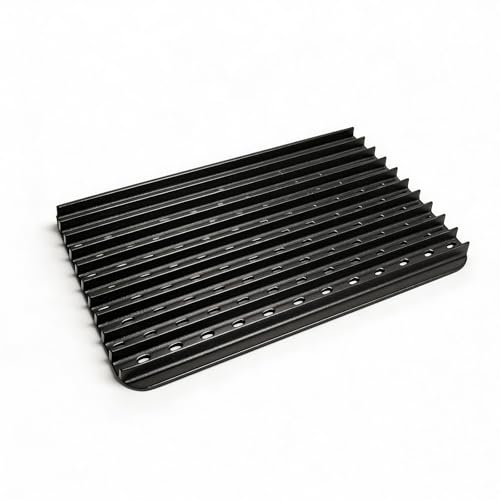
【BAC772 Sear Grill Grate】BAC772 grill grate for Traeger Woodridge Ironwood Timberline pellet grills, compatible with ModiFIRE sear grate, reversible sear grate, contained a competition level of sear mark
No Thermometer? Use the Thumb Test (Backup Only)
A meat thermometer is your best friend on the pellet grill, no question. Sometimes batteries die or you lend yours out and never see it again. When you’re stuck without one, the thumb test becomes your rough backup plan, though honestly, it’s more art than science.
Press the center of your loin chops or rib chops; you want slight firmness with spring back, zero mushiness. Mushy means undercooked, and nobody wants that disappointment. Thicker pork loin cuts, about an inch or more, buy you breathing room so you don’t fly past done into dry rubber territory.
Heat variations between pellet grills make this tricky. When uncertain, err firmer and longer, toward that 60 to 90 minute low range with a quick sear finish. Rest your chops 5 to 10 minutes off heat; carryover cooking helps even things out. It’s not perfect, but it beats guessing blindly.
Complete Timeline: From Fridge to Plate in 90 Minutes
Because timing is everything when you’re hungry and don’t want dry meat, this 90-minute breakdown keeps you on track without the guesswork. Grab your Boneless Pork loin chops, pat them dry, oil and season them, then let them sit about 15 minutes while your pellet grill preheats to 225°F. You’re ready to cook with real smoke flavor building from the start.
Smoke low at 225°F for roughly 45 minutes, watching the internal temp climb toward 100–130°F; thicker chops obviously take longer, patience pays off here. Keep cooking until you hit 145°F, that sweet spot where a little pink means juicy, not raw; definitely don’t rush this stage.
Sear 1–2 minutes per side at 450°F if you want crust, then rest 5–10 minutes before plating
Recommended Products

Premium Grade pork chops

Duroc Bone-In Pork Chops: includes 4 thick cut Duroc bone-in pork loin chops (14 oz each) with rich pork flavor, natural marbling, and a hearty chop size for grilling, pan-searing, baking, or air frying