


You could spend your whole life guessing when pork butt will finally be ready, and you’d still be wrong half the time. That’s because cooking by the clock is a rookie mistake that’ll leave you hungry at midnight or serving dry, stringy meat nobody wants.
The truth is, every shoulder fights the smoker differently, stalls hit temperatures like a brick wall, and wrapping decisions change everything.
Temperature rules this cook, not your dinner plans, and once you grasp why a 6-pound chunk of pork can torture you for 14 hours, you’ll never trust a recipe’s timing again.
How Long to Smoke Pork Butt at 225°F vs 275°F?
Why wrestle with guesswork when you can nail the timing from the start? At 225°F, you’re looking at roughly 2 hours per pound, so a 5–6 lb butt demands about 10–12 hours of your patience. Bump that heat to 275°F and your cook time per pound drops to roughly 1 to 1.5 hours, much faster but still demanding respect.
When smoking a pork butt, you’ll face decisions. Wrap the pork butt around 160°F internal temperature to push through stubborn stalls, choosing aluminum foil or butcher paper based on your bark preference. Foil steams faster with softer bark, butcher paper breathes better with crunchier results.
For any smoked pork butt recipe, ignore the clock at the finish. You’re done when you hit internal temp 195–204°F, that’s when collagen surrenders into pure, pullable magic. Trust your thermometer, not your watch.
Recommended Products

Wide Compatibility: Exact replacement RTD grill probe for Pit Boss Pellet Stoves that use the horizontal control boards (CAT-02-PG or AC03P9). Including Classic, Lexington, Austin, Tailgater, Sportsman, Competition, Navigator, Nascar and Pro Series; Also compatible for Buffalo Outdoor Sportsman Series Electric, Country Smokers Journeyman.

GREAT QUALITY: Stainless steel overbraid and Stainless Steel PRO probe can be used for either BBQ or food Cooking.(Incompatible with Handheld thermometer), It's a smoker accessories for father/ grandpa/ uncle/ husband/ boyfriend

Quality: This temperature probe for smoker features a durable nickel-plated brass body and heat-resistant silicone, withstanding temperatures up to 250°C for long-lasting performance and reliable use
Why Does Pork Butt Stall at 150–170°F?
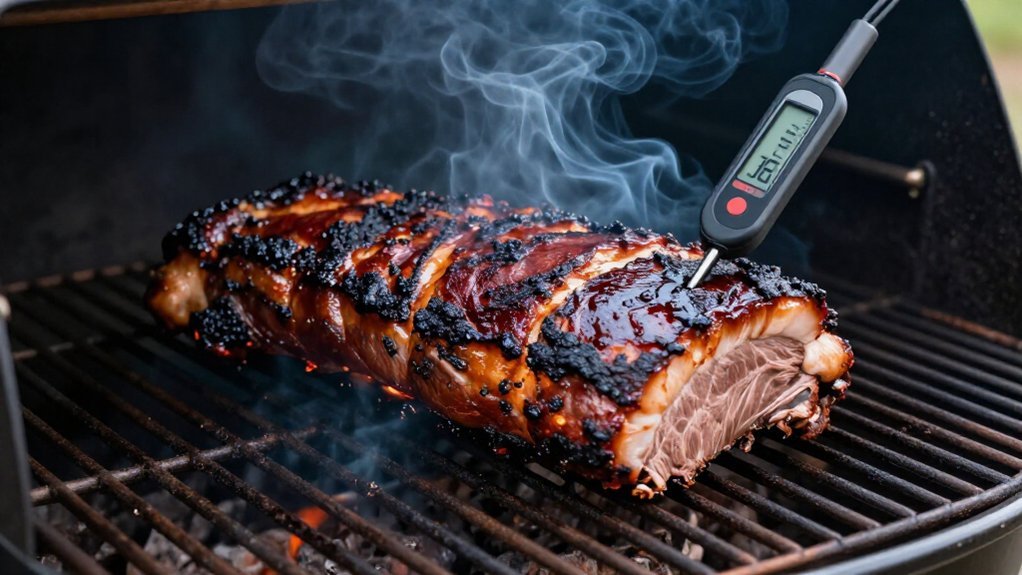
Ever wonder why your pork butt seems to hit a brick wall right when you’re getting excited? That’s the infamous stall at 150–170°F, and it’s driving you nuts because water and fat rush to the surface while collagen breaks down underneath. The evaporation steals heat that should push your internal temperature higher, so you’re stuck hovering for 3–4 hours even when you’ve nailed that low and slow technique.
A bigger, fattier cut makes this drag on longer; more moisture means more cooling. Pork butt vs brisket, both suffer, but pork’s fat content can extend your wait. You can wrap around 160°F with foil or butcher paper to trap steam, cutting evaporation and saving time. It’s a trade; foil softens bark more than butcher paper, but either beats watching that thermometer flatline.
Recommended Products
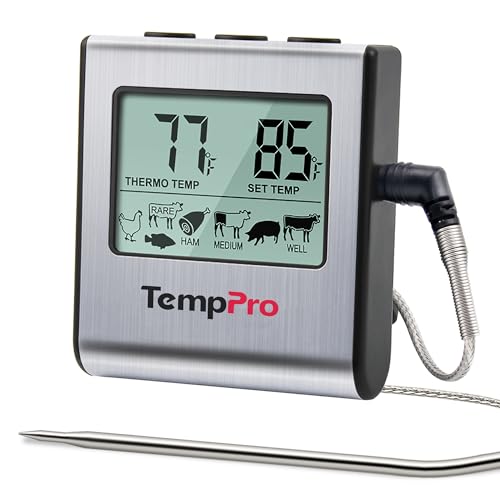
Cook mode with USDA preset temperature settings: TempPro cooking thermometer ideal for meat, oven, smoker or stove top; Programmable alert with preset temperatures for specific foods recommended by USDA; All of the preset temps can be reset to your desired tastes

More Stable Than Bluetooth: Our advanced RF technology ensures a stronger, more reliable connection than Bluetooth. This smoker thermometer provides the freedom to move around without losing connection! Monitor your BBQ from up to 1,000 feet away!

Unlimited Wi-Fi Remote Monitoring: Track your BBQ temperature from anywhere with Govee Home App. This versatile digital meat thermometer works great for patios, RVs, and backyard grilling, making it a must-have Bluetooth meat thermometer for convenient outdoor cooking.
Smoked Pork Butt Temps: Slice at 185°F, Pull at 205°F
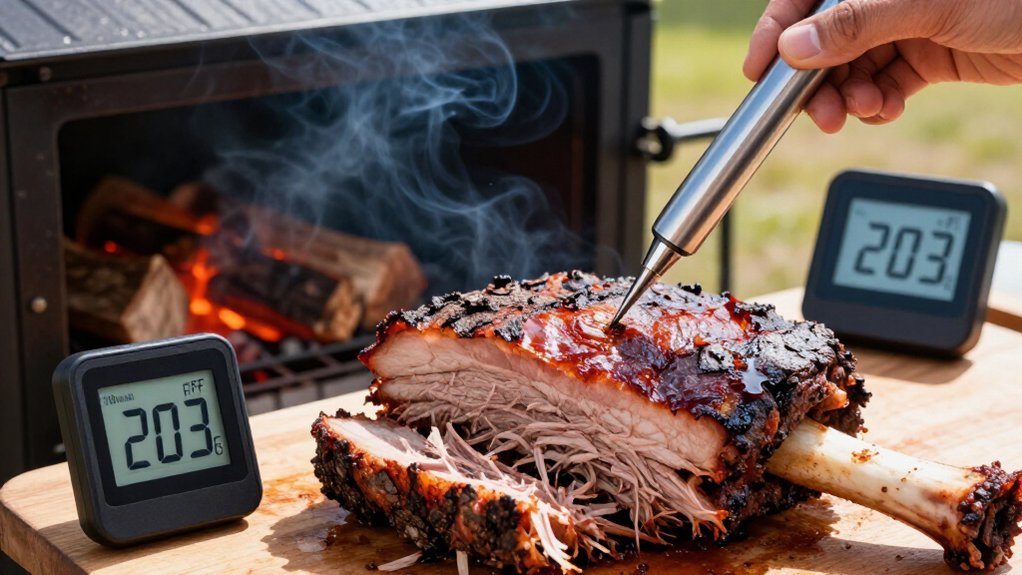
Once you’ve pushed through that stall and your pork butt is climbing again, you’ve got a decision to make, and it hinges on one number on your thermometer. Wrap around ~160°F to power through that frustrating plateau, then choose your finish.
Want neat, juicy slabs for sandwiches? You’ll slice at 185°F internal, where pork shoulder firms up beautifully but still yields to your knife. Craving that fall-apart magic for your smoked pulled pork recipe? Push to pull at 205°F, where collagen melts into silky, shreddable glory.
You’re smoking pork butts, not racing them. Pork butt stalls in that 150–170°F zone, so trust your meat thermometer, not the clock. Hit your target, rest 45–60 minutes, then slice or shred with confidence.
Recommended Products
Package Includes-One (1) Reynolds Wrap Heavy Duty Aluminum Foil Roll measuring 130 feet long by 12 inches wide (130 square feet total)

Package Includes: One (1) Reynolds Wrap Everyday Strength Aluminum Foil Roll measuring 100 feet long by 12 inches wide (100 square feet total)

Package Includes: One (1) Reynolds Wrap Pitmaster’s Choice Extra Thick Aluminum Foil Roll measuring 25 feet by 18 inches wide (37.5 square feet total)
When to Wrap Pork Butt (and When to Skip It)
Because that stall hits like a brick wall around 160°F to 170°F, you’ve got to decide whether to wrap or ride it out naked, and honestly, both paths lead to great pork, they just get you there differently. Most folks wrap their pork butt at 160°F–170°F, usually after five or six hours of smoke, because that stall can drag on forever otherwise. Grab butcher paper or foil; either works, though paper breathes better and keeps your bark from going soft. Wrapping preserves moisture and pushes you faster toward 195°F–205°F, where the meat surrenders completely.
But here’s the thing: if you’re chasing maximum smoke flavor and a bark that crunches, skip the wrap entirely. You’ll add several hours, sure, and you might curse the thermometer, but that unwrapped bark develops deeper character. Smoke can turn bitter if you push too long, so taste as you go.
Recommended Products

【PREMIUM NATURAL QUALITY】Made from premium virgin pulp, our butcher paper is unwaxed, uncoated, and unbleached for a natural and pure product. Ideal for grill masters seeking top-notch, food-safe paper to enhance their culinary creations.

【PREMIUM NATURAL QUALITY】Made from premium virgin pulp, our butcher paper is unwaxed, uncoated, and unbleached for a natural and pure product. Ideal for grill masters seeking top-notch, food-safe paper to enhance their culinary creations.

SIZE & DURABILITY FOR DAILY BBQ USE:Experience the ideal balance of strength and convenience with our 17.5" x 51 ft brown butcher paper roll. Designed for BBQ and smoking needs, it provides sufficient coverage for brisket, ribs, pork, and meat preparation
How Size and Fat Content Change Your Cook Time
You’ll quickly learn that pound-per-hour estimates are rough guesses at best, because an 8-pound monster can swallow 16 hours while a 5-pound buddy might wrap up in 12, and that gap only widens when fat enters the chat. More marbling means you’re stuck longer in the dreaded stall near 160°F, since all that connective tissue needs time to break down and baste the meat from the inside.
Don’t trust the clock, trust your thermometer, or you’ll be staring at a cold, greasy shoulder when dinner was supposed to hit the table an hour ago.
Recommended Products

Continuous smoke when cold smoking or hot smoking up to 275˚F Ideal for smoking cheese, fish, bacon, and jerky Automatically heats wood chips with the push of a button...
Pound-Per-Hour Estimates
Grab your calculator and throw it out the window, because cooking pork butt by the clock alone is a recipe for heartbreak. At 225°F, you will hit roughly 2 hours per pound, so a 5 lb Smoked Pork Butt lands around 10–14 hours total.
That stall will bite you: the meat plateaus at 150–170°F for 2–4 hours while collagen surrenders, and bigger butts fight longer per pound through this zone. Bump to 275°F and you can drop to 1–1.5 hours per pound, though the stall still laughs at your schedule.
You want Pulled Pork perfection, so wrap near 160°F, then ride the cook until internal hits 200–205°F or the bone pulls clean. Thermometer beats math every time.
Fat-Marbling Effects
While you might think a hefty, marbled pork butt is always better, that gorgeous fat comes with a price: time. Bigger butts with more fat and collagen force you to wait longer, since all that moisture must render before the internal temp climbs past the stall, 150–170°F. Fatty cuts commonly stall harder there, as water migrates to the surface and evaporates, cooling things while the meat breaks down underneath.
Leaner butts move through quicker and finish faster at the same temp, with less fat cap to manage. At 225°F, a 5 lb pork butt might take 14 hours, but a 10 lb specimen with serious marbling can push 15–20 hours. Don’t trust strict minutes per pound, just smoke the fat side up until you hit 195–204°F for that excellent pulled pork sandwich.
Pick Your Wood and Manage Temps Through the Stall
You’ll want to start with mild fruit woods like apple or cherry for that gentle sweetness, though I personally think hickory’s deeper “bacon-like” punch is worth adding once you’re comfortable with smoke levels.
When that stall hits, and it will, you’ll watch your pork butt’s internal temperature freeze somewhere between 150°F and 170°F for what feels like forever while moisture evaporates and cools the meat’s surface, which is frustrating but totally normal. Wrap it around 160°F to push through faster, keep your pit steady at 225–240°F, and don’t even think about pulling until you hit 195–205°F, because that stall is just a speed bump, not the finish line.
Recommended Products

TEMPERATURE PROBE CLIP: Plug and play, easy to use. Compatible with Traeger replacement probes can withstand temperatures up to 1000 °F (500 °C) and stainless steel wire can withstand temperatures up to 718 °F (380 °C)

Wide Compatibility: This grill ambient probe works with Traeger Pellet Grills (except PTG) and Z-Grill. Replace old RTD probes seamlessly to maintain grill efficiency.

Compatible with all Pit Boss grills and smokers equipped with digital control meat probe functionality, supporting 3.5mm plug grill models
Best Wood Choices
Because pork butt is basically a blank canvas for smoke, your wood choice matters way more than you’d think, and picking wrong can leave you with bitter, acrid meat that overpowers everything else. You’re in this for the long smoke haul, so choose wisely.
Mix apple and cherry for a sweet, mild flavor that lets your brown sugar rub shine without fighting it. Add a small chunk of hickory if you want that classic barbecue bite, but don’t go heavy; too much turns harsh fast. Keep your smoker steady at 225–250°F, because low-and-slow lets smoke penetrate deep without drying the outside.
Skip the apple juice spritz early; it softens bark when you need it firm. Let that bark set before you even think about wrapping, or you’ll wash away all your wood choice hard work.
Managing Temperature Stalls
After hours of tending your fire and breathing in that sweet apple-cherry smoke, you’re gonna hit a wall that makes you think your thermometer broke: the stall. You’ll watch your internal temp park around 150–170°F for what feels like forever, and that’s evaporative cooling working against you, moisture rising and cooling the surface while collagen breaking down keeps working inside.
Keep that smoker steady at 225–240°F and trust your probe; don’t panic. If you’re impatient, and who isn’t, wrap it in foil around 160°F to push through faster. Wood choice matters early for flavor, but once bark sets, extra smoke turns bitter, so wrapping helps there too. Stalls can drag 3–4 hours regardless of heat, so factor that into how long to cook pork butt.
How to Know Your Smoked Pork Butt Is Done
How exactly do you know when that beautiful hunk of pork butt has hit its sweet spot? You called Boston butt, this cut needs patience. Check degrees internal with your thermometer: you’re targeting 200–205°F for pulled pork perfection. If you want slicing instead, pull back to around 185°F, but that’s just not the same magic.
Your total cook time varies by pound, so don’t rush it. Watch for that stall near 150–170°F, then push through.
Here’s what done looks like:
- The thermometer slides in like warm butter, no resistance
- That bone wiggles out clean, practically greeting you
- Your fork twists and meat surrendering instantly
- The bark cracks, revealing steamy, juicy interior
- Collagen broken down, textures that pull apart
You smoke pork to change it, not merely heat it. Wrap tightly later, and you’ll reheat smoked pulled portions beautifully. Let it sit properly, though, that’s coming next.
Recommended Products

500FT Outdoor Monitoring: Unlike with bluetooth meat thermometer limited range of only 100ft; Wireless outdoor fryer accessory for cooking provides best in class, reliable connection of up to 500ft to ensure you can monitor from anywhere


500FT Long Range: Compared with those Bluetooth meat thermometer on the market, this meat thermometer digital wireless equips itself with radio frequency technology that will ensure you stronger signal and more stable connection from up to 500FT
Rest Your Pork Butt: Timing That Protects Juices
Once you pull that pork butt off the smoker, your patience gets its final test, and skipping this rest is where good barbecue goes to die. You need to rest your pork butt at least 45 to 60 minutes after it hits 195 to 204°F. Many shooters pull around 200 to 205°F for easy bone-pull and juicy results.
That downtime lets melted fat redistribute back through the meat instead of pooling on your cutting board like a sad puddle. If you wrapped in foil or butcher paper, keep it wrapped to hold it longer and prevent bark from drying out. The meat’s still cooking itself internally, so shredding early squeezes out every drop you fought for.
Need more time? Tuck it into insulation, cooler/blankets, no sweat.
Recommended Products

75 square feet of aluminum foil

PRE-CUT FOIL SHEETS: This package contains one box of 50 Reynolds Wrap Aluminum Foil sheets, measuring 14 x 10.25 inches each

HEAVY DUTY FOIL: This aluminum grilling foil is made for grilling, roasting, steaming, wrapping, and storage tasks where stronger hold matters. The durable roll supports larger cuts, outdoor cooking, and food handling with less tearing during use.
Speed Up the Cook Without Losing Quality
Your pork butt’s resting now, but maybe you waited too long to start, or you’ve got hungry people showing up sooner than planned. You can still smoke a pork butt fast without ruining it, but you’ve gotta be smart about when you push the heat.
Hold steady at 225°F for the first few hours to build that bark you want.
Once you hit about 160 degrees F internal, that’s when you need to wrap; the stall’s coming, and it’ll steal hours of cook time if you let it. Wrap the pork tight in foil or butcher paper, maybe splash some apple juice in there.
Kick your electric smoker up to 250–275°F after the wrap, then keep cooking steady. Pull when the bone will pull clean, around 200–205°F, then rest 45–60 minutes no matter what.
Recommended Products

Multi-Purpose Use: The Traeger Pink BBQ Butcher Paper Roll is perfect for covering brisket, lining BBQ trays or tables, and even wrapping gifts. Its versatility makes it a must-have for any grilling enthusiast.

Designed specifically for the culinary enthusiast, our 18 paper roll dispenser is optimally crafted to handle barbecue butcher paper, thereby ensuring the authentic taste of your smoked meats is maintained. This is your ideal bbq wrapping paper for smoking
Butchers Paper is ultra durable and strong; does a superior job trapping smoke while releasing steam