
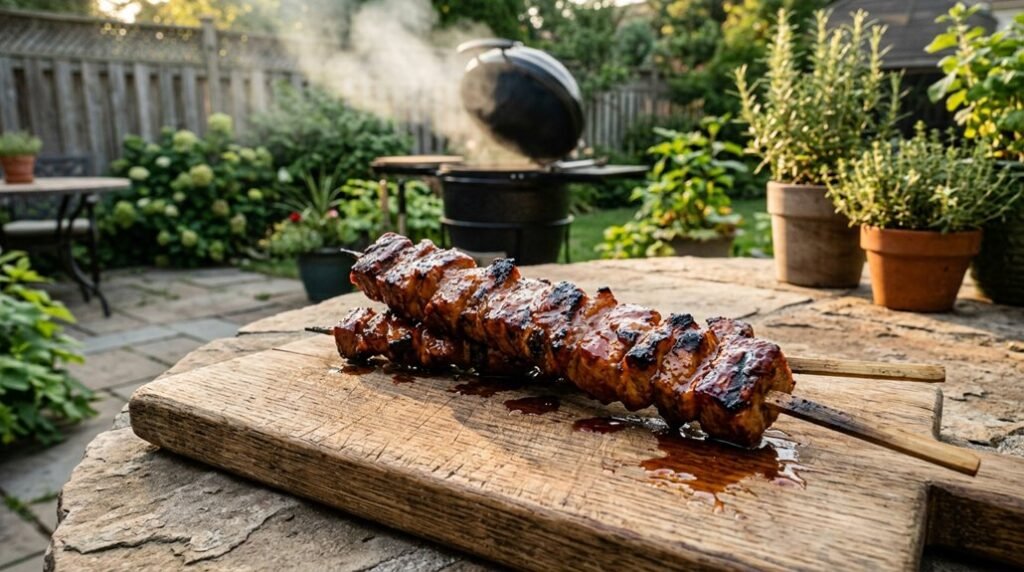


You want pork barbecue that actually tastes like the street stalls in Manila, not some sad, dry skewer from a mall food court.
Start with pork butt, that marbled shoulder cut that stays juicy even when you blast it over charcoal.
You’ll slice it thin, across the grain so it doesn’t chew like rubber, then soak it in a marinade built on 7-Up, soy sauce, and enough garlic to keep vampires away for weeks.
The sugar in that soda caramelizes fast, which means you’ve got to watch your heat like a hawk.
Four hours minimum in the fridge, no more than overnight, or you’ll end up with mush.
The real secret? Basting too early burns the sugar, so you wait until the pink fades.
But here’s the thing nobody tells you:
Pick Pork Butt and Cut It Thin Across the Grain
The secret to killer pork barbecue starts with the right cut, and pork butt, also called Boston butt or kasim, is your best friend here. Its marbling and connective tissue keep things juicy, delivering tender, flavorful BBQ Pork that beats leaner cuts hands down.
Whether you’re aiming for sauced skewers or BBQ Pulled Pork later, this cut won’t let you down.
Grab your knife and slice the pork thin, as uniform as you can manage. Uneven pork slices cook unevenly, and nobody wants half-raw bites next to burnt edges. Cut across the grain, perpendicular to those muscle fibers; you’ll thank yourself when each bite melts instead of fights back.
Load 2–3 slices per skewer, enough for thorough cooking without drying out. Pat everything dry before you start; surface moisture kills your sear and dilutes your sauce, apple cider vinegar blend, or whatever bright, tangy glaze you’re planning.
Recommended Products
![Bad Byron's Butt Rub Seasoning, 26 oz– All-Purpose BBQ Dry Rub for Pork, Chicken, Beef & More – Gluten-Free, No MSG [Pack of 2]](https://m.media-amazon.com/images/I/41R5bgN4i-L._SL500_.jpg)
Award-Winning BBQ Seasoning – Famous for its balanced blend of savory, smoky, and mildly spicy flavors, trusted by championship pitmasters and backyard grillers alike.

BBQ Grilling Humor design. Love slow cooking some meat, rubs, sauce, brisket, pulled pork beer can chicken, or sausage. You have a mop brush, wood chip, apple wood, cherry wood, and wood chips, this awesome tee pitmaster grilling

Mix the Marinade: 7-Up, Soy Sauce, Calamansi, and Garlic

You’ll start your marinade by whisking together 7-Up, soy sauce, calamansi, that’s your Filipino citrus fruit, and a generous heap of minced garlic, which frankly beats those bland store-bought mixes that cost too much and taste like salt water.
The 7-Up brings subtle sweetness and helps tenderize, while the calamansi adds bright acidity that punches through the soy sauce’s deep saltiness; it’s that sweet-salty-acid balance that makes Filipino pork barbecue so addictive compared to the one-note marinades you’ll find elsewhere. Don’t skimp on the garlic, use at least six cloves, because this isn’t the place to be timid. The finished blend should coat a spoon thickly and smell sharp enough to make your eyes water just a little, and that’s when you’ll know you’ve nailed the base before adding black pepper or chili for extra zing.
Recommended Products

Soy Vay, Hoisin Garlic Marinade & Sauce (Pack of 2)

Pack of six, 21-ounce bottles (total of 126-ounces)

Two 22 ounce bottles of Soy Vay Marinade and Sauce, Hoisin Garlic
Marinade Base Ingredients
Because a great marinade makes or breaks your pork barbecue, you’ll want to start with a liquid base that hits every flavor note hard. Grab 7-Up, soy sauce, and calamansi (or lemon/lime juice if that’s what you’ve got). The soda brings subtle sweetness and helps tenderize, the soy sauce delivers that deep salty punch, and the calamansi adds bright acidity, similar to vinegar but with a more complex, floral kick.
Skip the garlic powder; fresh garlic is non-negotiable here. Mince it fine, lots of it, so every pork slice gets that aromatic wallop. Whisk everything until it looks uniform, then pour it over your meat. Mix thoroughly, cover tight with cling wrap, and refrigerate. You’ll marinate the meat at least four hours, though overnight’s where the real magic happens.
Flavor Balance Tips
Once you’re ready to build that marinade, grab a big mixing bowl and don’t hold back on the garlic, we’re talking a whole head, minced fine, maybe more if you’re the type who measures that stuff with your heart. Dump in the soy sauce, squeeze a dozen calamansi until your fingers cramp, pour that 7-Up, and don’t forget the brown sugar, you’re chasing balance here, not diabetes. Stir until everything dissolves, then taste. It should hit savory, bright, and sweet all at once, miss one element and your homemade bbq flops hard.
Now, for your basting sauce, either boil that leftover marinade for ten minutes or mix fresh, nobody wants food poisoning at their cookout. Start basting once the pink fades, building that sticky, garlicky crust.
Marinate 4 Hours: or Overnight for Deeper Flavor

Although you could rush it, marinating your thinly sliced pork for just four hours gets the job done. Overnight is where the real magic happens. This Pork BBQ Recipe really shines when you let spicy vinegar, soy sauce, garlic, and chili work their way deep into the meat. You’ll want to mix that marinade thoroughly, then pop everything into an airtight container and store it in the fridge. Trust me, the difference is night and day.
Here’s what you need to remember:
- Four hours minimum, but overnight for best results, no exceptions
- Don’t push past overnight, that acid will turn your pork weird and mushy
- Pull it out when you’re ready to grill, extra waiting won’t save a weak marinade
Recommended Products

Made with lemon juice, red bell peppers and herbs like basil & thyme

New York State Fair–Inspired Flavor – A bright lemon and garlic marinade rooted in classic Upstate NY food traditions.
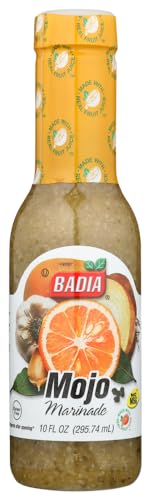
No Artificial Coloring or Sugar Added
Soak Skewers and Thread 2–3 Slices for Even Cooking
Make sure you soak those bamboo skewers for at least 30 minutes before you start, or you’ll watch them turn to charcoal on the grill, and nobody wants that disappointment. While they soak, grab your sliced pork and pat it dry, seriously, don’t skip this, excess water dilutes your marinade and ruins the whole point of that wait.
Thread just 2 to 3 thin, uniform pieces per skewer, anything more and you’re asking for uneven cooking with raw centers and burnt edges. Keep them similar in thickness so each skewer hits the same minutes per side without guesswork. Thin slices across the grain give you tender bites that actually absorb the bbq sauce, plus they’ll cook fast and evenly. You’re setting yourself up for success here, not disaster.
Recommended Products

FOOD GRADE MATERIALS: This Silicone Basting Brush Set is BPA Free, non-toxic, and lead free with a stainless steel core inside the non-slip handle. Made from premium food grade silicone, the silicone bristles will not break or shed in your food, providing a more hygienic cooking experience

SILICONE BRISTLES THAT RESIST FRAYING: Brush features silicone bristles that will not fray or shed when layering thick sauces, glazes, and marinades onto chicken, ribs, brisket, or any grilling protein during extended sessions.
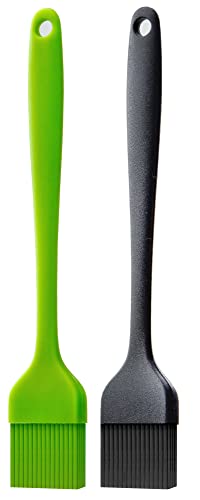
BPA FREE silicone brush.
Grill Over Charcoal: Timing, Heat, and When to Baste
You’ll want your grill blazing hot, the kind of heat where you can’t hold your hand above the grate for more than a second or two, because lukewarm coals will leave you with rubbery, half-cooked pork that’s frankly embarrassing to serve.
Flip those skewers every two to three minutes, no more, since constant fussing just tears the meat and wastes precious cooking time. Wait until the pink fades before you start basting, otherwise you’re burning sugar onto raw pork, which tastes as terrible as it sounds.
Recommended Products

One bone-in pork shoulder blade roast weighing between 1.6 and 3.8 pounds

Used by championship barbeques, professional chefs, and backyard cooks everywhere

Award-Winning BBQ Seasoning – Famous for its balanced blend of savory, smoky, and mildly spicy flavors, trusted by championship pitmasters and backyard grillers alike.
Heat Level Guidelines
Since you soaked those bamboo skewers for at least 30 minutes, you’re already ahead of the game and ready to get grilling. Fire up hot charcoal; you’re aiming for fast, fierce heat that sears the pork without turning it to shoe leather.
You’ll flip those skewers every 2 to 3 minutes, about 3 to 5 minutes total, until the meat’s cooked through and no longer pink. Start basting once the color fades, roughly halfway through, so the sauce caramelizes beautifully instead of burning to a crisp. If you’re repurposing marinade as baste, bring it to a boil for 10–15 minutes first. Food safety isn’t optional. Baste lightly, let the char develop, and you’re golden.
- Grill hot and fast, 2–3 minutes per side
- Baste at the midpoint, not the start
- Boil used marinade before basting, or ditch it
Baste Application Timing
Get those skewers on the grates and watch the magic start. You’re grilling over hot charcoal, about 2–3 minutes per side, and timing your baste matters more than you’d think. Don’t rush it. Wait until the pork starts losing its pinkness, that raw-looking fade, before you even reach for your small bowl.
Mix your baste with oyster sauce, ketchup, a drizzle of sesame oil, and a crack of black pepper. Hit that midpoint, brush it on, and let the heat do its work without burning the glaze. Keep those coals steady; you want even caramelization, not charred disappointment.
Skip the leftover marinade unless you’ve boiled it hard for 10–15 minutes first. Food safety isn’t optional here. Nail the timing, and you’ll taste the difference.
Flip Interval Technique
Flip those skewers with purpose, because every turn costs you heat and moisture you can’t afford to lose. You’re grilling Boston butt over hot charcoal, which means you’ve got a narrow window to nail that 2–3 minutes per side without turning your pork into jerky. Flip only once, maybe twice, and watch for that moment when the pink fades. That’s your signal. Stop. Baste.
Baste with a separate basting mixture, not raw marinade gunk. Boil leftover marinade 10–15 minutes if you must reuse it, seriously. Hit the meat during the flip for sticky, even caramelization.
Keep going until the center’s cooked through, no longer translucent, edges slightly charred. Get it right, and you’ll have fall-apart tender pieces worth the sweat. Get sloppy with the flips, and you’ll cry into dry, sad pork.
Dip in Spicy Vinegar: The Essential Filipino Way
The soul of Filipino pork barbecue isn’t found in the meat itself, it’s waiting in that tall jar of spicy vinegar on the side. You’ve grilled your boneless pork shoulder to juicy perfection, about 2–5 minutes per side, but don’t skip this step. That sharp, calamansi-kicked dip changes every bite.
Let me know if you’ve tried pork shoulder roast marinated overnight in vinegar, it tenderizes beautifully. The spicy vinegar isn’t just an afterthought, it’s the finish that makes Filipino Pork street food legendary. Submit your question if you’re confused: keep your dipping vinegar separate from any basting sauce that touched raw meat. Safety matters, but flavor rules. You’ll dip, you’ll wince slightly, you’ll immediately reach for another skewer. That’s the essential Filipino way.
Recommended Products

WEEKNIGHT MEAL: Add Hoisin Garlic Teriyaki Marinade and Sauce to homemade meals for an easy weeknight dinner with four delicious flavors of sweet and salty tangy and garlicky; Package may vary

DISTINCT ORIGIN: Crafted in Japan, this authentic shoyu delivers traditional quality and depth for everyday cooking and elevated dishes.

Make It a Meal: Java Rice and Classic Pairings
Once you’ve got those glistening skewers off the grill, you’re only halfway to the real Filipino barbecue experience, because how you plate it matters just as much as how you cook it. This recipe makes something complete when you pile on Java rice, that vibrant orange, garlicky fried rice that soaks up every drop of smoky-sweet glaze.
You’ll want a tall jar of spicy vinegar dip within reach; it’s non-negotiable for cutting through the richness. Add atchara for crunch and tang, or swap in pancit if you’re feeding a crowd. Next time, try baked sweet potato on the side. That combo hits different.
- Serve your barbecue over Java rice with spicy vinegar dip on the side
- Add atchara for brightness, or swap in pancit for variety
- Next time, try sweet potato: the recipe makes comfort food magic happen
Recommended Products

You will receive (1) 16 Oz Lemon-Garlic Marinade

Combines hoisin, garlic, and soy sauce for a savory taste.

New York State Fair–Inspired Flavor – A bright lemon and garlic marinade rooted in classic Upstate NY food traditions.