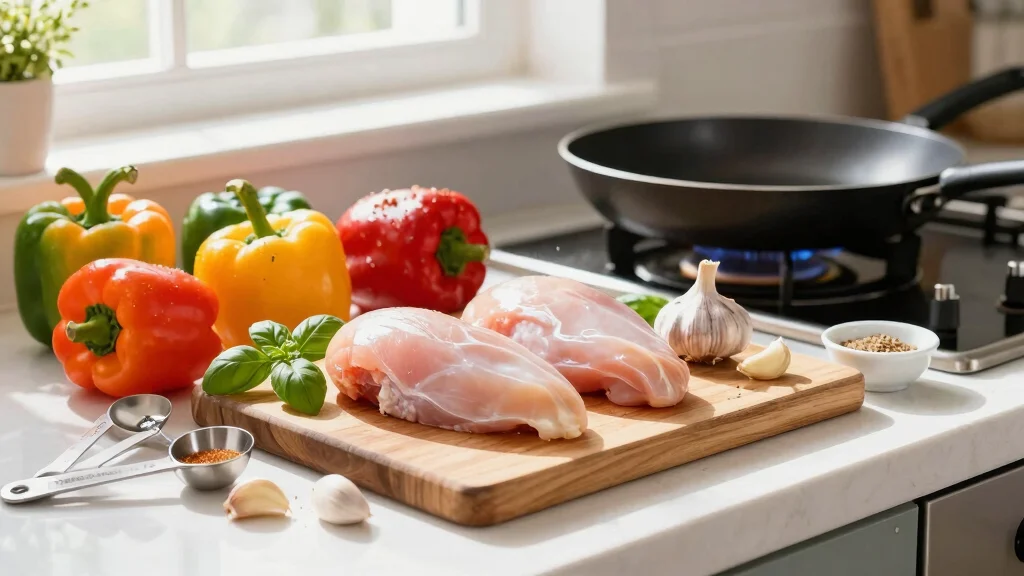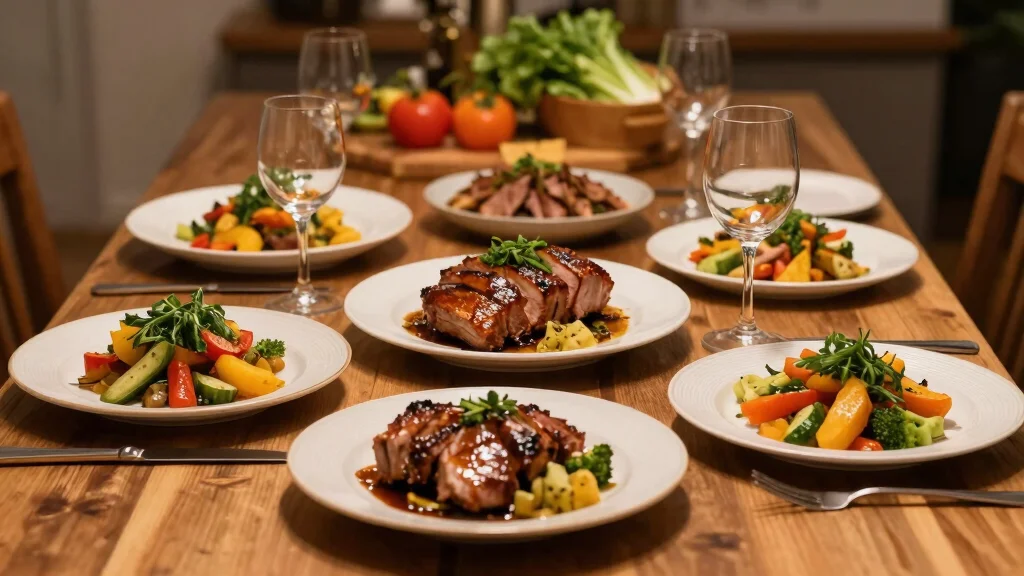



You want crispy pork sisig but don’t own a grill, and honestly, that’s not a problem.
The stovetop method actually beats most backyard setups if you know what you’re doing.
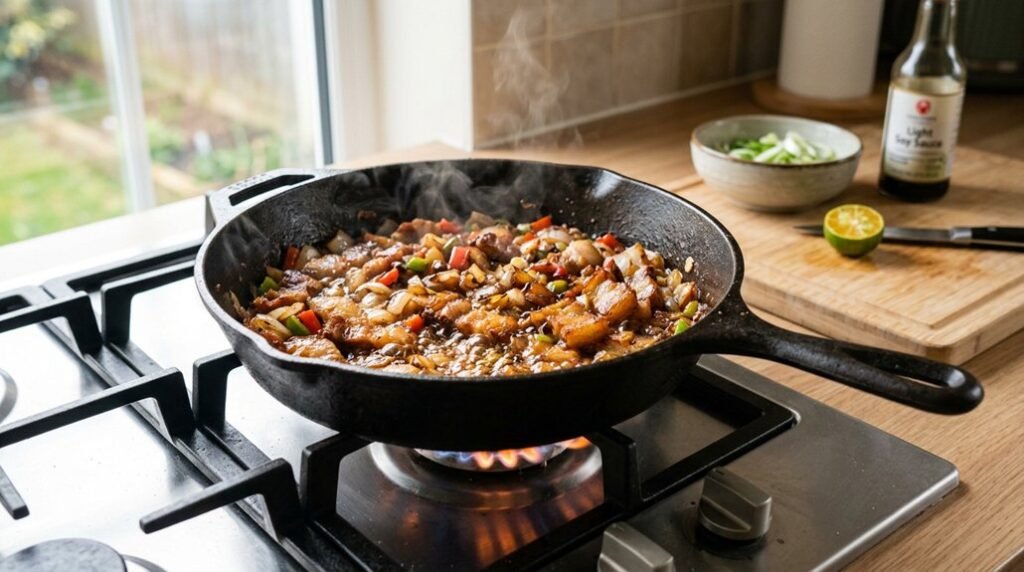
You’ll chop belly into fat-marbled cubes, boil them tender, then sear hard in a ripping-hot cast-iron skillet until they shatter between your teeth.
The trick is patience: crowding the pan steams your meat, so work in batches.
Garlic, onions, and chilies build your base, liver spread adds that funky depth you can’t quite name, and calamansi cuts through the richness just right.
The raw egg yolk at the end isn’t optional, it’s essential.
But here’s what nobody tells you about getting that restaurant-style sizzle without the sizzling plate…
Crispy Stovetop Sisig: The No-Grill Method Overview
With just a stovetop and some crispy pre-cooked pork, you can skip the grill entirely and still make sisig worth bragging about. You’re building this dish on belly that’s already crunchy, either leftover lechon kawali or pork you crisped yourself in the air fryer. Chop that crispy pork belly into small cubes so every bite crackles.
Start by sautéing garlic and half your onions until they turn soft and sweet, then toss in chilies until your kitchen smells incredible. Throw in the pork, stir-fry for two or three minutes, and hit it with soy sauce, pepper, and calamansi. A spoonful of liver spread deepens the flavor without much effort.
Pile everything onto a screaming hot sizzling plate, wait thirty seconds, and dig in while it’s still sizzling.
Recommended Products
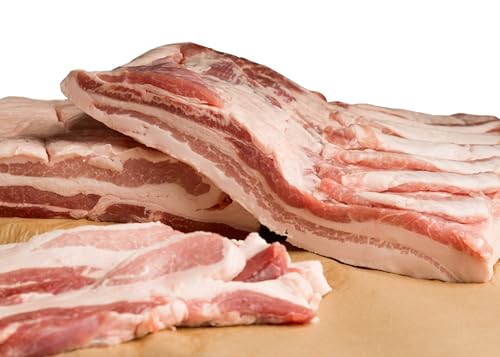
PREMIUM FRESH PORK BELLY — High‑quality, thick‑cut pork belly with the skin on, perfect for achieving ultra‑crispy crackling or tender, juicy layers.


Guilt-Free Deliciousness: This flavored pork rind is made with high-quality back skins and all-natural ingredients; delectable paleo and keto-friendly snack that only contains 1 gram of carbohydrates and 80 calories per serving
Pick Pork Belly Cuts That Pan-Crisp Best
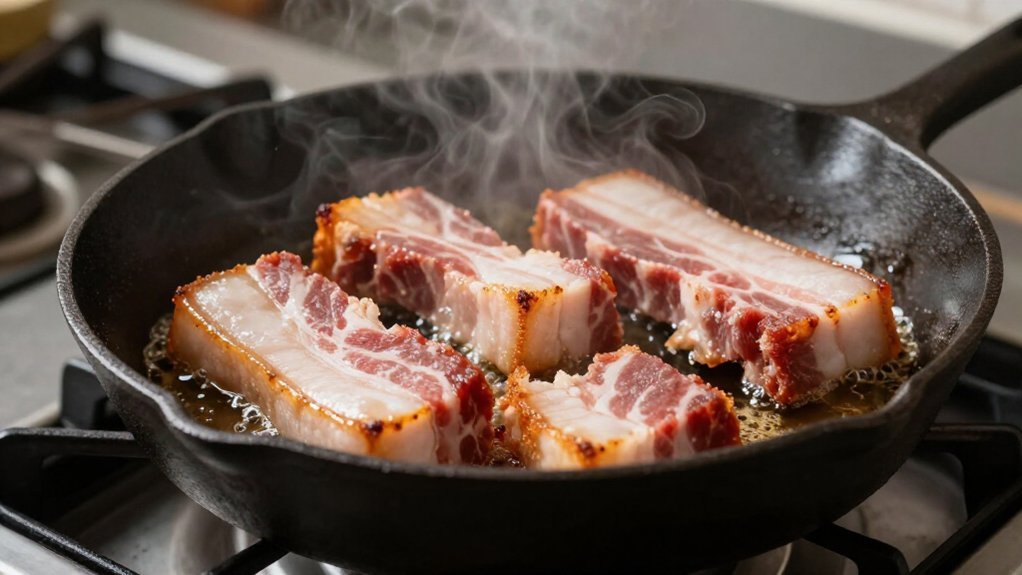
You’ll want pork belly with enough fat to sizzle and crisp, not just sad little meat scraps that turn rubbery in the pan. Go for cuts about 1–1.5 inches thick with visible white fat layers; that fat renders down into crackly goodness while the meat stays juicy inside.
Skip the super-lean stuff, it’s a waste of your time, since you need rendered fat to get that chewy, crunchy texture sisig’s famous for.
Recommended Products

Double Burner Configuration: The Lodge Double Play Reversible Cast Iron Grill/Griddle covers two burners, offering a generous breakfast grill plate for family breakfasts or meal prep with ease

Quality Cast Iron Frying Pan: The Lodge Seasoned Cast Iron Skillet is loved for its great heat retention, incredible durability, and ability to make almost any recipe you dream up

VERSATILE COOKING PERFORMANCE: Ideal for stovetop, oven, grill, or open flame—perfect for searing, browning, baking, and more.
Fat Content Balance
At the heart of great stovetop sisig sits a simple truth, fat equals flavor and texture you can’t fake. You’ll want pork belly with its thick fat layer, since that rendered goodness carries flavor through every bite. Cut it into small cubes, about half-inch pieces, so you get more surface area touching your cast iron pan. That’s how you achieve crispy edges without drying out the interior.
Skip the lean stuff like pork loin. It’ll turn chewy and sad when you simmer it in calamansi juice and soy sauce. Instead, let that fat render slowly, then crank the heat so your pork gets sizzling hot and golden. The fat melts, coats your onions and chilies, and creates the rich base that makes sisig worth eating.
Heat Distribution Control
Because you can’t fix bad heat with good intentions, picking the right pork belly cut matters more than your burner setting ever will. You want 1 to 1½ inch thickness so the fat renders slowly without turning rubbery. Go thinner and you’re begging for dry, disappointing meat.
Cut into 1-inch cubes, then grab your cast iron skillet, nothing else conducts heat this evenly. You need that consistent surface for real pan-crisping, not sad steaming. If you’re using pre-cooked belly, pat it bone-dry first, then start medium-high and ease down only when you see that beautiful crust forming.
Prefer thick, even fat layers; they render into the chewy-crisp texture that makes sisig worth eating. Trim those ragged edges or they’ll burn while the center stays pale and sad.
Now you’re sizzling on a hot plate, tossing half of the onions, hitting everything with black pepper. This is cooking the sisig right: controlled heat, proper cut, no excuses.
Boil Until Tender: The First Cook
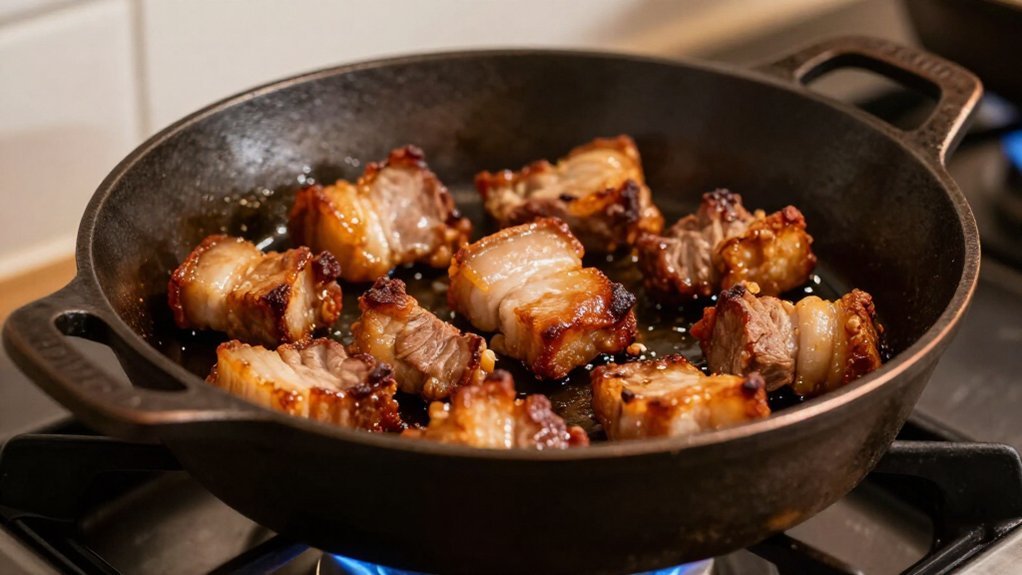
Before you can get that signature crispy, sizzling texture that makes sisig so addictive, you’ve got to deal with the meat’s tough side, and boiling is honestly the most reliable way to do it without a grill.
Make pork belly your cut of choice, chop it into strips or cubes, and drop it into a pot with bay leaves, salt, and pepper. You’ll simmer for about an hour until a fork slides right through. That’s it. You’ve got to boil until tender because tough meat ruins the whole thing.
Once cooled, chop that pork into small pieces; honestly, this matters more than people think. More edges mean more crunch. Remember, sisig is made with chopped pork, served on a sizzling plate, so this base step sets everything up perfectly.
Sear to Crispy: High-Heat Pan Technique
Once you’ve got that boiled pork belly chopped down, you’re ready for the part that actually makes sisig worth eating. Using pork belly chopped small, you’re chasing that perfect crunch that separates decent pork from real sizzling sisig. Heat your cast iron until it smokes, add just enough oil to coat the bottom, and don’t hold back: this needs to be hot sizzling, not gentle warming.
Here’s where patience pays. If you crowd the pan, you’ll steam the meat and ruin everything. Work in batches, letting those edges turn deeply golden and crispy. The fat renders out, leaving you with crunchy bits that make the dish. You want real texture, not soft chunks pretending to be something special.
Toss in your chili peppers and aromatics only at the very end. Finish with liquid seasonings off the heat so your crisp work doesn’t go soggy.
Recommended Products

10 oz organic reduced sodium shoyu soy sauce

✔ VALUE 5-PACK BUNDLE Includes five 4.42 fl oz bottles—ideal for families, bulk buyers, or anyone who loves cooking with flavorful seasoning.

Sauté Aromatics: Garlic, Onion, and Chili Timing
After you’ve pulled that crispy pork from the pan, you’re staring down the difference between just-okay sisig and something that actually makes people ask for your recipe. You’re at the aromatic stage, and timing here isn’t forgiving.
Start by sautéing garlic with about half your onion, red onion works best, until it turns soft and sweet. This builds your base, mellowing the garlic’s bite so it doesn’t steal the show. Don’t rush it; translucent means patience, not guesswork.
Sauté garlic with half your red onion until soft and sweet—patience turns translucent, not guesswork.
Now here’s where people trip up: toss in your green chili only after those aromatics are fully soft. Keep the pan hot, stir like you mean it, and let the chilies bloom fast, roughly thirty seconds. You’ll smell when it’s right. Bitterness means you blinked too long.
Hold back remaining onion for crunch later.
Recommended Products

Durable aluminum - Ensures long-lasting use in busy kitchens

Stainless steel - Ensures durability for heavy kitchen use

HEAVY DUTY CAST IRON:Crafted from premium food grade cast iron, this sizzling plate offers superior heat retention to keep your steak or fajitas hot until the last bite. The durable construction is designed for consistent use in both home kitchens and busy restaurants.
Finish With Calamansi: Tart, Salty, Final Seasoning
Now that you’ve got your aromatics singing and your pork belly crisped up in the pan, you’re ready for the move that separates real sisig from a greasy disappointment. You need calamansi juice, that tiny green citrus that tastes like lime’s sharper, more interesting cousin. Pour it in at the very end, when your crispy sisig is still hot; this keeps that bright, tart snap alive and kicking.
The late Anthony Bourdain got it: without this citrus hit, you’re just eating fatty pork. The acid cuts through all that richness, balancing the salt and soy sauce you’ve built up. Let it simmer briefly, maybe 30 seconds, just until the flavors meld.
Taste it. Need more salt? Pepper? Fix it now.
No calamansi? Lime works, but you’ll miss that distinctly Pinoy twang. Skip this step, and you’ve basically failed.
Recommended Products
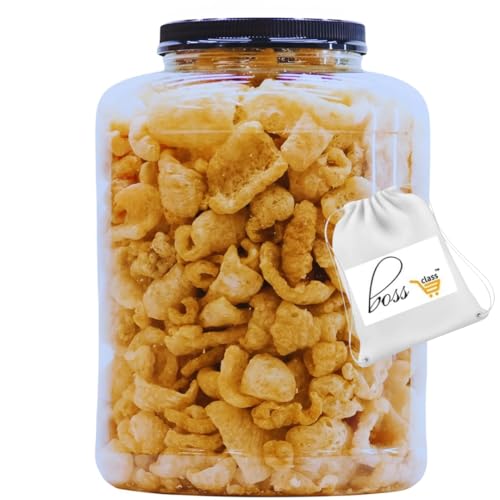
HIGH PROTEIN SNACK: Deliciously crunchy pork rinds packed with 9g of protein per serving and zero carbs, perfect for keto and paleo-friendly dieting GENEROUS PORTION: Large...
Serve Sizzling: Hot Plate and Egg Topping
You’ll want to grab a sizzling plate or cast-iron skillet and crank it screaming hot, because that heat keeps your sisig crackling and alive at the table rather than turning sad and soggy. Drop a fresh egg, sunny-side up, right on top so the yolk breaks creamy over the crispy pork. It’s basically the best part and you’d be crazy to skip it.
Move fast here, though: sisig waits for no one, and once it cools you’ve lost that magic contrast between the sizzling meat and sharp, crunchy onions.
Recommended Products

Quality Cast Iron Frying Pan: The Lodge Seasoned Cast Iron Skillet is loved for its great heat retention, incredible durability, and ability to make almost any recipe you dream up

Deep Cooking Capacity: The Lodge Cast Iron Covered Deep Skillet features a spacious design with extra room for braising, frying, and sautéing family-size meals for versatile everyday cooking

Quality Cast Iron Frying Pan: The Lodge Seasoned Cast Iron Skillet is loved for its great heat retention, incredible durability, and ability to make almost any recipe you dream up
Hot Plate Benefits
For the best pork sisig experience, you want that satisfying sizzle that hits your ears before your mouth even does, and a hot plate makes that happen without any fancy restaurant equipment. Making sizzling pork sisig at home feels like you’ve opened your own little restaurant, except your kitchen doesn’t need a flamethrower.
The hot plate benefits are pretty straightforward: you get that dramatic “fresh-off-the-stove” taste that lasts through your entire meal. When you make sisig and serve it immediately, transferring it onto a preheated cast-iron surface, the pork keeps its crispy edges and the aroma stays locked in.
Served on a sizzling plate, the residual heat works like a gentle warmer, so you won’t suffer through lukewarm, rubbery bites halfway through dinner. It’s simple, effective stuff.
Egg Yolk Creaminess
A perfect pork sisig needs that glossy egg yolk draped over the top, and getting it right is easier than you’d think. You’re chasing that legendary egg yolk creaminess Aling Lucing made famous in Pampanga, not some sad scrambled mess.
Here’s how you nail it:
- Crack a raw yolk onto your sizzling pork right off the stovetop, letting the residual heat gently thicken it into silky perfection without cooking it through.
- Preheat your hot plate until it’s screaming hot; cast iron works best, because constant heat makes that yolk into glossy magic.
- Mix a spoonful of mayo into traditional sisig if you want extra richness, though honestly nothing beats the real deal.
- Layer crisp raw onions underneath, splash lemon juice or lime juice for balance, then serve immediately. Lukewarm sisig equals wasted effort, and nobody wants that disappointment.
Serving Temperature Tips
The whole point of sisig, really, is that sizzle, that crackle, that little hiss you hear when the plate hits the table. You’ve worked hard to get that pork face crispy, so don’t blow it now.
Heat your sizzling plate until it’s screaming hot, then transfer to a serving dish that actually holds heat; cast iron works beautifully. Let it sit for thirty seconds. You’ll hear the magic happen.
Serve pork sisig immediately, no dilly dallying, because once that plate cools, your crispy edges turn sad and stewy. Crack a fresh egg on top right before it leaves the kitchen; that runny yolk is your sauce.
Pair it with white rice, obviously. Eat fast, stay happy.
Store and Reheat: Keep Leftovers Crispy
Leftovers usually disappoint, but your pork sisig doesn’t have to suffer that sad, soggy fate. You’re dealing with Filipino Food, and you know Lechon Kawali sets the crispy standard, so your leftover pork sisig deserves better than a sad microwave massacre. If you’ve had a hard time keeping that texture alive, here’s your fix.
Follow these steps:
- Cool your sisig to room temperature first, then stash it in an airtight container, fridge-bound for 3–4 days max.
- Reheat in a screaming hot skillet over medium-high heat, stirring like you mean it, until those edges crackle again.
- Work in batches; crowding steams the meat, and nobody wants that tragedy.
- Skip the microwave entirely, it’s a texture assassin, or freeze properly with air squeezed out, thawing overnight before the pan rescue.