


Over 70% of backyard pitmasters admit they’ve ruined at least one pork shoulder by guessing temperatures instead of following a system.
You have probably stood at your pellet grill, second-guessing every degree, wondering if 225°F is too low or if cranking to 250°F sacrifices too much bark.
The frustration is real, and the stakes are high when you are feeding a crowd.
That stall at 150–160°F hits like a wall, and your patience wears thin.
But here is what changes everything.
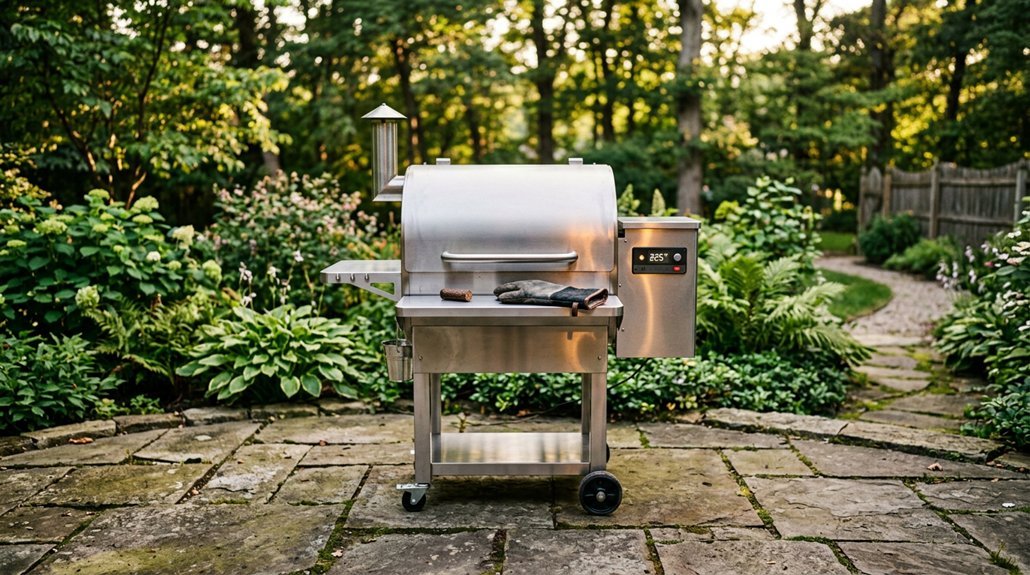
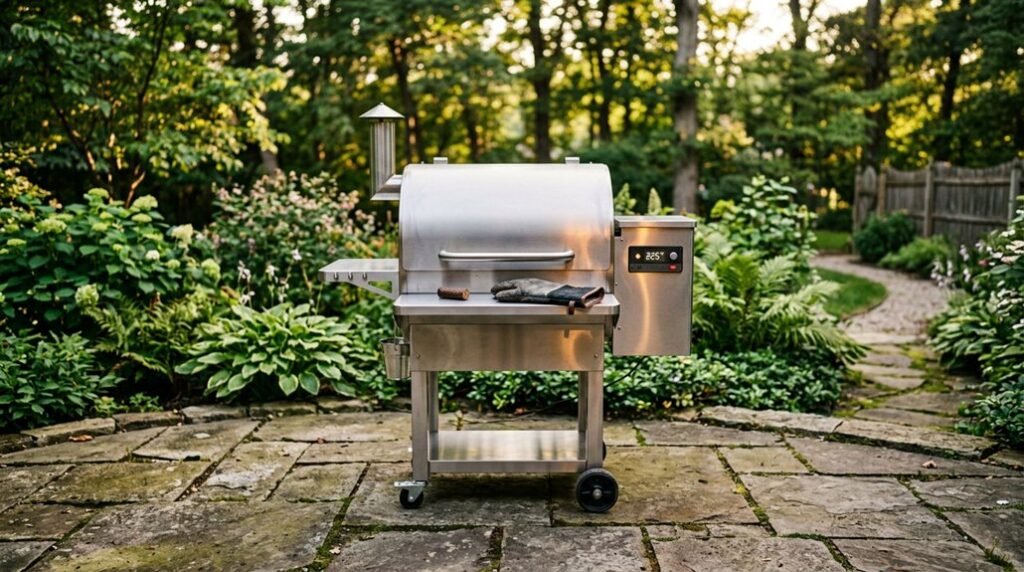
Preheat Your Pellet Grill to 225°F (or 250°F for Faster Cooks)
A steady 225°F is where real bark magic happens, so that’s where you’ll want to park your pellet grill if you’ve got the time. You’ll get steadier smoke and more time for collagen to break down into that silky, pull-apart goodness. That low temp stretches cook time per pound to roughly 90 minutes, maybe less, maybe more, depending on your specific shoulder and how stubborn it’s feeling about softening up.
If you’re impatient, 250°F works. You’ll shave hours off without totally betraying the bark gods, but there’s a trade-off: slightly less smoke penetration. Preheat your pellet grill until it’s locked in at your chosen temp before you even think about adding meat. Swingy temps ruin everything.
Monitor the internal temperature religiously. Use a meat thermometer; don’t guess. Guessing disappoints everyone at the table.
Recommended Products

Bluetooth Monitor Remotely: Govee Bluetooth meat thermometer lets you check the temperature of your grill, smoker, or oven from your phone. With this smart BBQ thermometer, you can multitask while grilling.

BBQ HI/LOW temp range alarm: Set your desired food temp and HI/LOW temp range for your grill or smoker to know when to add more fuel smoker thermometer will flash and beep to remind you if the temperature ever goes out your set range; HI/LOW temp range alarm is specifically designed for usage with smokers, grills and BBQs

PERFECT DONENESS, EVERY TIME: This smart cooking thermometer takes away guesswork with real-time internal temperature updates, flip reminders, rest timers, estimated cooking times, Guided Cooking recipes, and more!
Catch the Stall Early: What Happens at 150–160°F
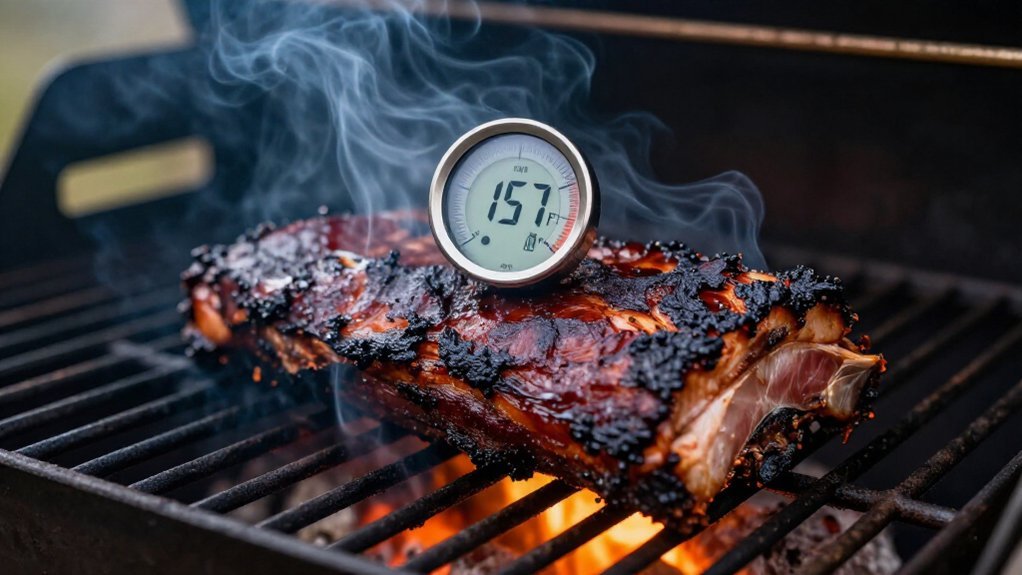
Once your pork’s rolling along nicely at 225°F, you’ll hit a maddening speed bump that trips up plenty of first-timers. Your pork shoulder stalls hard at 150–160°F, sometimes for hours.
Moisture pushes to the surface, evaporates, and cools the meat like sweat on your brow. The thermometer freezes, but don’t panic. Inside, collagen melts into silky goodness, building that tender Smoked Pork Shoulder you crave.
Resist cranking the heat or wrapping too early. Keep your pellet grill steady, trust the process, and spritz with apple cider vinegar if bark looks thirsty. The stall breaks once surface moisture finally dries, letting temps climb toward 195–204°F.
Smoke needs patience; the wait rewards you with fall-apart perfection no shortcut delivers.
Recommended Products

Fine mist ACV spritz and basting spray for smoking and grilling. Light coat for bark on brisket, ribs, and pulled pork—not a heavy soak

What is Spritz King? Our culinary basting sprays make it easier for you to achieve a crunchy, deep, robust dark bark with a moist interior when grilling, smoking, or air frying. Simply apply our innovative BBQ spritz throughout the cooking process to yield tastier, more flavorful meats, veggies, and seafood.
Season for Bark: Mustard, Rub, and Rest
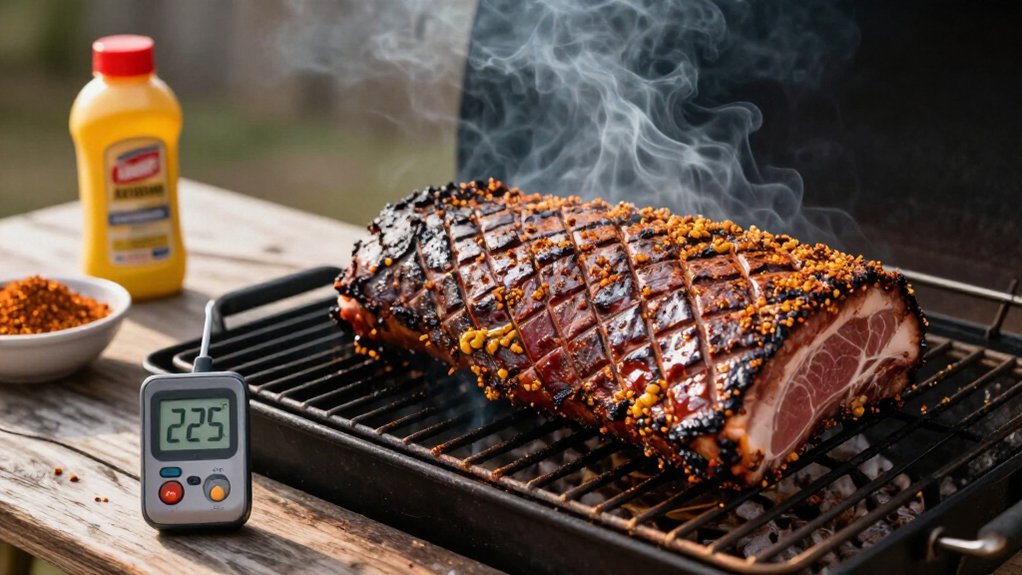
Before the smoke ever touches your pork, you’ve got one shot to build the bark that separates mediocre barbecue from the stuff that wins competitions. Slather your smoked pork butt with yellow mustard; it works as a sticky binder that helps your dry rub grip the meat without tasting like mustard after hours in the smoker.
Pile on a thick, even coating of sweet BBQ rub, rubbing just enough so it contacts the meat. The sugar will caramelize beautifully. Skip complicated brines and keep it simple.
At steady low heat, lightly spritz with apple juice to keep the surface tacky for better bark formation. Once you hit 195, 204°F, wrap that beauty in foil or butcher paper; aluminum foil works too. Rest at least an hour so juices redistribute without steaming off your hard-won crust.
Recommended Products

Used by championship barbeques, professional chefs, and backyard cooks everywhere

Award-Winning BBQ Seasoning – Famous for its balanced blend of savory, smoky, and mildly spicy flavors, trusted by championship pitmasters and backyard grillers alike.

Award-Winning BBQ Seasoning – Famous for its balanced blend of savory, smoky, and mildly spicy flavors, trusted by championship pitmasters and backyard grillers alike.
Place Fat-Side Up and Let Smoke Work
Your bark’s set, your rub’s locked in, and now it’s showtime. Set that fat side facing the sky when smoking pork butt on your pellet grill. This positioning lets the rendered fat drip down and baste the meat naturally, keeping everything juicy.
You’re running low and slow, around 225°F, so the fat cap melts gradually rather than burning. That same fat cap shields the meat from harsh heat while soaking up apple wood smoke to build a killer crust. Place it fat-side up, close the lid, and step back.
Don’t peek. Every time you lift that lid, you sabotage your smoked pork butt recipe, letting heat escape and stalling bark formation. Let the smoke work uninterrupted for those first few hours. Patience here separates backyard rookies from pitmasters.
Recommended Products

More Stable Than Bluetooth: Our advanced RF technology ensures a stronger, more reliable connection than Bluetooth. This smoker thermometer provides the freedom to move around without losing connection! Monitor your BBQ from up to 1,000 feet away!

BBQ / Grill pit thermometer, safe and environmentally friendly.

Large Display: Features a 2 3/8 inches large face for clear visibility; Stem length of 2 7/8 inches enhances accessibility; Enables easy classification of food temperatures in various cooking environments
Decide at the Stall: Wrap in Foil or Push Through
Why does your pork shoulder suddenly hit a wall at 160°F, sitting there for hours like it’s forgotten the whole point? You’ve hit the stall, that frustrating plateau where evaporative cooling fights your fire. When smoking a pork butt, you’ve got two paths forward, and both demand your probe, not your clock.
The stall hits when evaporative cooling battles your fire—your probe, not your clock, decides when it’s done.
Here’s your choice:
- Wrap in foil or butcher paper when the temperature of the meat stalls; this traps moisture and heat, pushing you through faster.
- Push through unwrapped for tougher bark, though you’ll wait longer while collagen slowly breaks down.
- Trust your thermometer, not time, since either route needs rest afterward for clean pulling.
Foil speeds things up. Paper breathes better but still helps. Neither’s wrong; pick your priority.
Want bark that cracks? Accept the wait. Want dinner sooner? Wrap it tight.
Smoke to Probe-Tender (195–205°F Internal)
Although you’ve fought through the stall, the real test is knowing precisely when your pork shoulder shifts from tough muscle into shreddable perfection, and that happens when your probe glides into the thickest part like you’re sliding a knife through warm butter.
When you smoke a pork butt, don’t trust looks alone, that bark might fool you. Stick your thermometer deep into the thickest section, avoiding bone, and hunt for probe-tender (195–205°F internal). At 195°F, start testing; slight resistance means keep going, zero resistance means you’ve nailed it.
Time is a liar, but collagen breakdown at these temps never is. If you wrapped earlier, that foil helped speed things along. Pull the pork only when it’s truly ready, not a minute sooner. You’ll thank yourself when that Reheat Smoked Pulled pork still tastes incredible days later.
Recommended Products

Lady luck is on your side so go ahead and roll the dice. You’ve hit the luck of the draw with our Carolina Gold BBQ Rub. Use this snappy blend of tangy honey mustard and you'll have a full house of hungry friends.

Used by championship barbequers, professional chefs, and backyard cooks everywhere

Award-Winning BBQ Seasoning – Famous for its balanced blend of savory, smoky, and mildly spicy flavors, trusted by championship pitmasters and backyard grillers alike.
Rest Your Smoked Pork Shoulder (1 Hour Minimum)
Once you’ve hit that magic probe-tender mark, you can’t just shred it right away. That’d be a crime against all that hard work. You need to wrap that beauty up tight in foil or butcher paper, then let it rest for at least one hour, though two hours won’t hurt anything. Here’s why resting matters when you smoke our pork butt:
- Juices redistribute and don’t spill everywhere when you shred
- Temperature evens out so you don’t burn your fingers
- Meat stays moist instead of turning into jerky
When your pork reaches that 195–204°F sweet spot, remove the pork from the pellet grill immediately. Don’t let it sit there cooking forever. Rest longer if you want pull-apart tender perfection; it’s worth the wait. Pulled pork demands patience, and trust me, you’ll taste the difference.
Recommended Products

Smoking Guide: Easy to understand and allows you to cook meat perfectly and safely every time. Using this turkey temperature chart ,You will be able to create perfectly cooked meat through careful monitoring of temperature.

BBQ charcoal pit temperature gauge with large degree scales and numbers , easy to read even from far away.
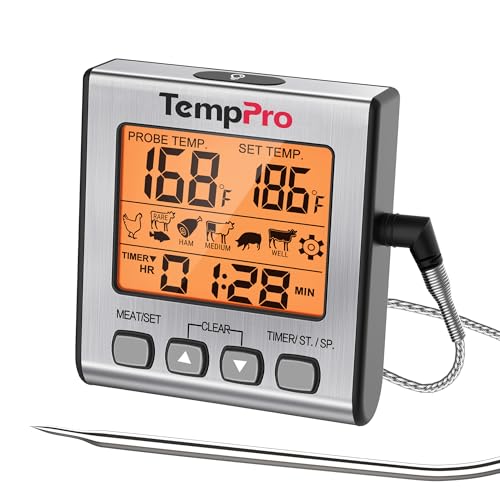
Precision Cooking, Perfect Results: Never overcook again! This digital meat thermometer features a food-safe probe with ±1.8°F accuracy and a 40" heat-resistant cable, continuously monitoring your BBQ, oven, or smoker from 14°F to 572°F for perfectly cooked meals every time
Shred, Sauce, and Serve
You have rested that pork shoulder like a pro, and now you are ready to shred it while it is still warm enough that the bone practically slides out clean, which is honestly the most satisfying part of the whole cook. Grab two forks and pull the meat into strands, working with the grain rather than against it. Shredding technique basics matter more than most beginners realize, and if you skip mixing in those rendered drippings you will end up with dry, disappointing pork that wastes all your effort.
When it comes to sauce pairing options, you will want to skip drowning the whole batch, instead lightly saucing what you are serving right then, so you keep that smoky bark intact. A vinegar-based Carolina sauce hits different than a thick Kansas City-style glaze, though both have their place depending on whether you want tang or sweetness cutting through the rich, fatty meat.
Shredding Technique Basics
Why rush the best part? Your pulled pork butt deserves patience after all that work building the perfect bark. Once you’ve hit that magical 195–204°F and the probe slides like butter, let it rest 30–60 minutes, juicy promise sealed inside.
Now shred the meat with confidence. Here’s how you nail it:
- Grab two sturdy forks, lift with one, pull apart with the other
- Follow the muscle grain, those fibers separate like tender secrets
- Work in a few tablespoons of rendered drippings to lock in moisture without drowning the texture
That gorgeous BBQ pulled pork you’ve created shouldn’t turn greasy, just succulent. Skip the spray bottle here, you’ve graduated past nursing the cook. Your perfect bark earned its moment; don’t sauce it into oblivion yet. Serve warm, shred while it still steams, and taste what patience built.
Sauce Pairing Options
Since you’ve let that shoulder rest like a pro, the real fun starts now. Shredding’s done, and it’s time to make some hard choices about sauce. Your favorite BBQ sauce changes everything: grab sweet Kansas City for that sticky classic bark, or go tart with cider-vinegar if you want the fat to sing.
This smoked pulled pork recipe deserves respect, so toss it with warm drippings first, then sauce lightly. You want juicy, not soup.
For a classic pulled pork sandwich, pile it high with slaw and pickles; the crunch cuts through the richness. Feeling adventurous? Pulled pork tacos with onion, cilantro, and salsa hit different. Either way, save some leftover pulled for tomorrow, and reheat gently with apple juice so you don’t ruin all that hard work.
Boston Butt vs. Picnic: What to Buy Next Time
You’re standing at the butcher counter, and now you’ve got to choose between two cuts that both come from the shoulder but couldn’t behave more differently on your pellet grill. The Boston butt sits higher on the pig, packed with marbling and connective tissue that melts into juicy, shreddable perfection.
The picnic shoulder hangs lower on the foreleg, with a thicker fat cap but less of the internal richness you need for truly tender pulled pork. If you’re feeding a crowd and want consistent, foolproof results, grab the butt every time. The picnic can save you a few bucks when you’re after a roastier, more steak-like texture.
Recommended Products

Award-Winning BBQ Seasoning – Famous for its balanced blend of savory, smoky, and mildly spicy flavors, trusted by championship pitmasters and backyard grillers alike.

CONVENIENT SEASONING: A Texas-style blend of sea salt, mustard, garlic, and hickory smoke for cooking up “love and happiness” at the grill. Seasoning is kosher.

For any dish from big to small, this pork seasoning rub will be your ticket to fame. Hypnotize taste buds and tantalize the senses with the Notorious P.I.G. rub, and earn your right to be called a Pitmaster.
Location on Pig
Although both cuts come from the pig’s shoulder, you’ll get two very different experiences depending on which one you grab at the butcher counter.
The Boston butt sits in the upper part of the shoulder, and it’s honestly the easier win for most backyard cooks. You’ll find it with more marbling throughout, which means juicier results without babysitting. The picnic shoulder comes from lower down, closer to the leg, so it’s leaner and can dry out if you rush it.
Here’s what to remember when you’re standing at the meat case:
- Boston butt labels the fatty upper shoulder; grab this for foolproof pulled pork
- Picnic shoulder marks the leaner lower portion; it’s tasty but needs more attention
- Either cut of meat works low-and-slow, though you’ll place them directly on the grill the same way
Marbling Comparison
Why does marbling matter so much when you’re staring at two hunks of pork in the cooler? That intramuscular fat determines whether you’re eating dry, stringy disappointment or succulent, juicy meat that falls apart with a gentle tug.
In this marbling comparison, Boston butt clearly takes the prize. You’ll spot streaks of white fat woven throughout the muscle, and that pork butt will take longer to cook, sure, but you’ll thank yourself later when every bite melts on your tongue.
The picnic shoulder, with its thicker fat cap and extra connective tissue, still delivers great flavor, but you’ll work harder for it. You’ll need to cook past temperature targets until probe-tender when the collagen finally surrenders. Choose the butt for foolproof tenderness, or grab the picnic if you crave that authentic, gelatin-rich chew and don’t mind the wait.
Best Cooking Uses
Since you’ve mastered the marbling basics, let’s talk money and muscle, because picking the right cut means the difference between a stress-free smoke and a guessing game you didn’t sign up for. You want smoked pork butts that practically pull themselves, so grab a bone-in Boston butt, usually 8–10 lb of pure forgiveness.
Here’s why it wins:
- More fat marbling keeps everything juicy during the low cooking process
- Collagen breaks down beautifully when pork reaches 195–204°F internal
- You can wrap it in an aluminum pan later, no muss, no fuss
The picnic shoulder? It’s leaner, tougher, and you’ve got to fight through more connective tissue. Sure, it’ll get fully broken down eventually, but why make work for yourself? Boston butt delivers predictable, shreddable magic every single time.
When Pork Finishes Early: Hold and Keep Warm
Because nobody wants dry pulled pork, you’ll need a backup plan when that pork shoulder hits 195–205°F ahead of schedule. When you smoke the pork and that pork roast finishes early, don’t panic and keep cooking just to kill time. You’ve already invested hours of cook time into that Butt, so trust the process and pull it off your pellet grill wrapped tight.
Tuck it into an insulated cooler or holding oven at 150–170°F for one to two hours minimum. This rest lets juices redistribute, keeping your shredded pork moist and tender. Probe for that probe-tender feel, then hold steady: don’t let it dip below 140°F. Shred after the hold while warm, breaking down connective tissue into perfect, pull-apart strands.
Recommended Products

3" face bbq smoker themometer for insulated cabinets

✅[ Easy Temperature Reading ] - 3 3/16'' Large Dial BBQ Grill Smoker Thermometer with enlarged degree scales and numbers , easy to read even from far away. Perfectly fits for most smokers or grills with a 3/8 inch opening or hole

The 2 3/8" large face of the temperature gauge makes it easy to read and classify the temperature of your food. The Stem is 2 7/8"