
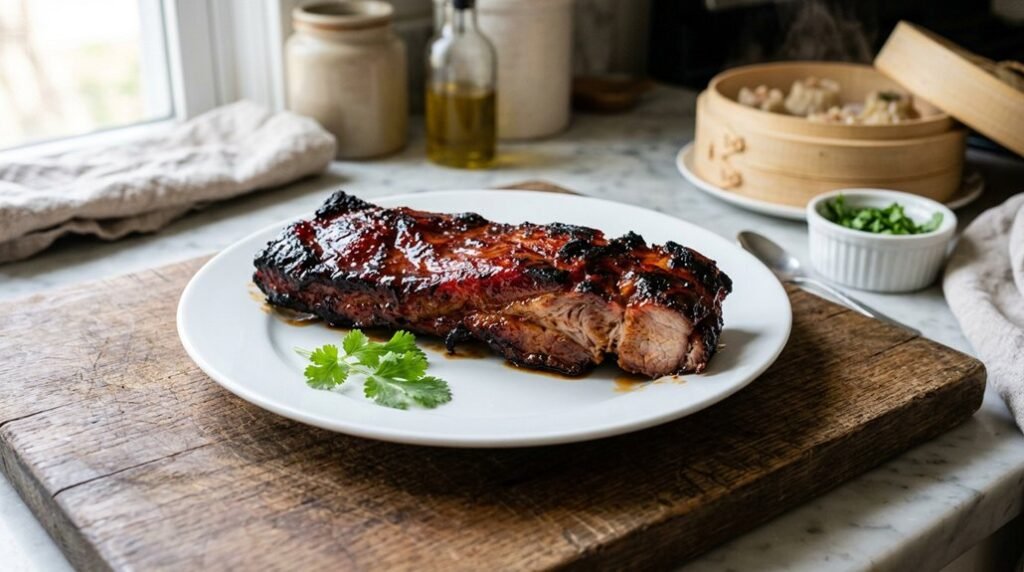


You have probably walked past those glistening red pork strips hanging in restaurant windows and thought, no way you are pulling that off at home. That deep crimson color, the sticky-sweet glaze, the charred edges that give way to juicy meat; it looks like magic, but really it is just patience and the right marinade.
The truth is, most home cooks mess up char siu by rushing the marinade or cranking the oven too high, and you end up with dry, pale strips that taste like sweet soy sauce and regret. The shoulder cut saves you here. It has enough fat to stay moist through high heat, unlike loin, which turns to shoe leather.
Your marinade needs hoisin for body, five-spice for that warm, licoricey depth, and Shaoxing wine, which is basically Chinese cooking sherry, cheap and worth hunting down. The red food coloring is optional, but honestly, without it your pork looks like tired ham. Twenty-four hours minimum in the fridge, or freeze it for later; the wait is non-negotiable for flavor penetration.
You will roast it on a rack with water underneath so the dripping sugar does not smoke out your kitchen. Basting every ten minutes builds that lacquered finish, and pulling the meat at 140°F keeps it tender. The real question is what you will do with the leftovers, because frying rice with char siu is almost better than the roast itself.
Choose the Best Pork Cut for Char Siu (Shoulder Wins and Here’s Why)
Although you’ll notice pork loin sitting pretty in the display case, don’t let it fool you, because pork shoulder is what you actually want for char siu that tastes like it came from a proper Cantonese BBQ shop. Sure, pork loin looks neat and lean, but you’ll be disappointed when it turns dry and stringy halfway through baking. That higher fat content in pork shoulder, or pork butt if you’re swapping cuts, keeps the meat juicy while it soaks up every drop of your marinade.
When you make char siu, you want sticky, caramelized Chinese BBQ pork that stays tender, not something that fights back when you chew it. Cut your pork shoulder into long strips, about one inch thick, so each piece cooks evenly and hits that perfect internal temperature without guesswork. With this choice, your char siu recipe goes from homemade-okay to restaurant-worthy.
Recommended Products

Authentic Char Siu Seasoning Mix: NOH Chinese Barbecue Char Siu Seasoning Mix is a carefully crafted blend that brings the authentic flavors of Chinese BBQ to your kitchen; Designed to create a perfect char siu marinade for meats, it offers a convenient, easy-to-use solution for achieving a classic sweet and savory barbecue taste; For an extra touch of authenticity, mix the char siu seasoning with honey to create a beautiful, glossy glaze that enhances flavor and gives your meats that signature finish

Authentic Char Siu Seasoning Mix: NOH Chinese Barbecue Char Siu Seasoning Mix is a carefully crafted blend that brings the authentic flavors of Chinese BBQ to your kitchen; Designed to create a perfect char siu marinade for meats, it offers a convenient, easy-to-use solution for achieving a classic sweet and savory barbecue taste; For an extra touch of authenticity, mix the char siu seasoning with honey to create a beautiful, glossy glaze that enhances flavor and gives your meats that signature finish

Authentic Char Siu Seasoning Mix: NOH Chinese Barbecue Char Siu Seasoning Mix is a carefully crafted blend that brings the authentic flavors of Chinese BBQ to your kitchen; Designed to create a perfect char siu marinade for meats, it offers a convenient, easy-to-use solution for achieving a classic sweet and savory barbecue taste; For an extra touch of authenticity, mix the char siu seasoning with honey to create a beautiful, glossy glaze that enhances flavor and gives your meats that signature finish
Mix Your Char Siu Marinade: 8 Ingredients for That Signature Red Glaze
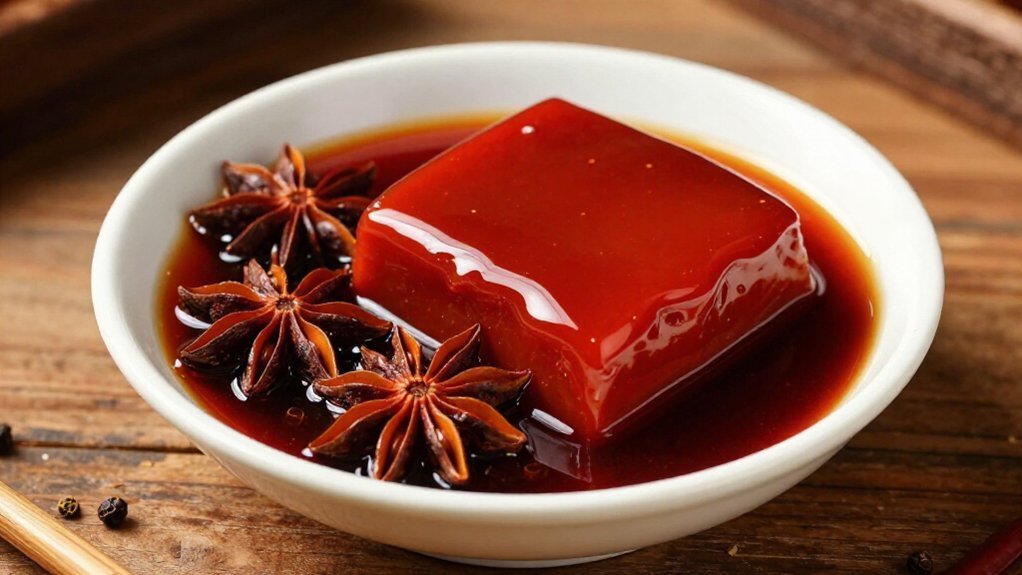
You’ll combine hoisin sauce, honey or maltose, soy sauce, Chinese five-spice powder, Shaoxing wine, garlic, and sesame oil to build that addictive sweet-salty base, then decide if you want the classic restaurant-red look. Skip the food coloring and your char siu still tastes incredible, but add those two tablespoons if you crave that dramatic visual punch people expect.
Stir until smooth, rub it all over your pork strips, and seal them up tight. Don’t forget to stash two tablespoons aside for later. That reserved marinade becomes your secret weapon for sticky, caramelized glory.
Recommended Products

Soy Vay, Hoisin Garlic Marinade & Sauce (Pack of 2)

Combines hoisin, garlic, and soy sauce for a savory taste.

WEEKNIGHT MEAL: Add Hoisin Garlic Teriyaki Marinade and Sauce to homemade meals for an easy weeknight dinner with four delicious flavors of sweet and salty tangy and garlicky; Package may vary
Essential Marinade Components
Because great char siu starts with a marinade that hits every note at once, you’ll want to build yours from the ground up with eight ingredients that balance sweet, salty, and aromatic into something genuinely addictive.
Start your pork marinade with hoisin sauce and soy sauce as the salty-sweet backbone; they’re thick, punchy, and absolutely non-negotiable. Add Chinese five spice powder for that warm, cozy aroma, cinnamon and star anise doing the heavy lifting.
You’ll need garlic and Shaoxing cooking wine to cut through the sugar and add depth; skip either and you’ll taste the difference, trust me. Sesame oil brings subtle nuttiness, just half a teaspoon, while red food coloring gives you restaurant looks without affecting flavor. Add honey, then marinate overnight. You’ll baste with reserved marinade later.
Achieving Vibrant Color
You’ve got your marinade built, but let’s be honest: nobody gets excited about gray pork. That iconic scarlet Char Siu look separates homemade attempts from restaurant quality. Your base of Chinese five spice, hoisin sauce, and soy creates deep flavor, but red food coloring delivers the visual punch. Don’t fear those few drops; they’re strictly for show, not taste.
Score your pork tenderloin so the tinted liquid seeps into every crevice. After marinating overnight, roast on a baking rack to let heat circulate evenly. Here’s the trick: boost your oven temperature to 450°F near the end, then brush with reserved marinade whisked with honey and a splash of hot water. That caramelized BBQ sauce glaze turns properly crimson and sticky, not pale and disappointing.
Marinate 24–48 Hours: or Freeze Now for Make-Ahead Meals
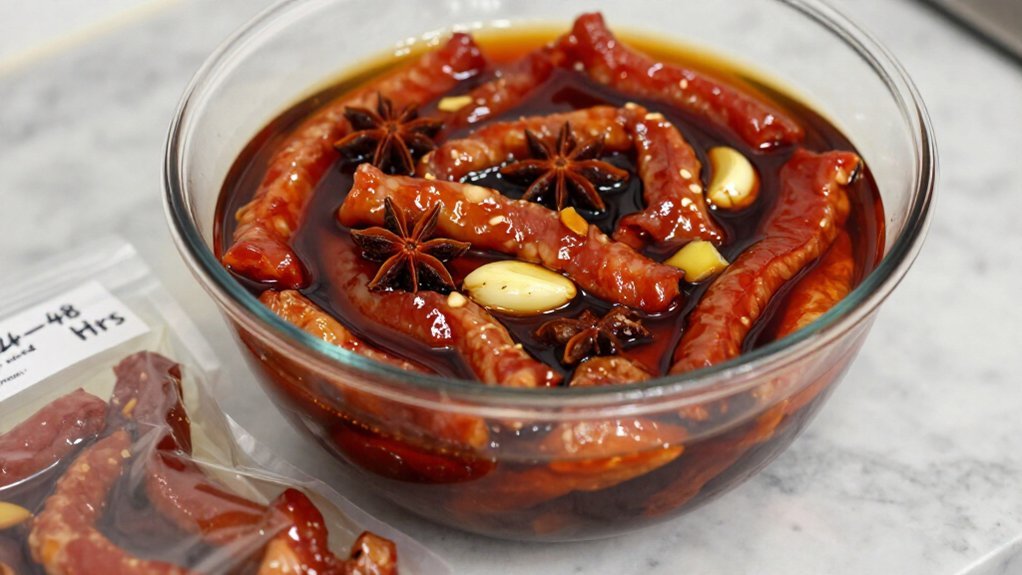
Once you’ve coated that pork in the sticky-sweet marinade, don’t rush it, because patience here is what separates decent home cooks from the ones who nail restaurant-quality char siu. For Chinese BBQ that actually tastes like Chinatown, you need to marinate 24, 48 hours, no shortcuts.
- Seal that Char Siu Pork in a freezer bag, keep temps consistently cold, and let the sugar and soy work deep into the meat.
- Want make-ahead meals? Freeze the marinated pork up to 2 months; it’s a solid backup plan for busy weeks.
- Always thaw under refrigeration overnight so the texture stays firm, not mushy.
- When ready, you’ll transfer to a baking sheet, roast until your meat thermometer hits safe temp, and enjoy pork that rivals any takeout joint.
Recommended Products

SIMPLE INGREDIENTS, TRADITIONAL FLAVOR: Made with a straightforward blend of rice, water, wheat, salt and caramel, Soeos Shaoxing Cooking Wine brings a balanced savory depth to everyday cooking. Contains wheat.

WIDELY USED: Shaoxing cooking wine is used as a cooking wine. Every Chinese restaurant uses Shaoxing wine in almost every savory dish.

WIDELY USED: Shaoxing cooking wine is used as a cooking wine. Every Chinese restaurant uses Shaoxing wine in almost every savory dish.
Prep Your Oven: The Rack-and-Water Trick That Prevents Burning
Your pork’s finally soaked up all that flavor, and now it’s time to get your oven situation sorted before anything hits the heat. First, grab your aluminum foil and line that sheet pan, trust me, you’ll thank yourself later when cleanup takes thirty seconds.
Now set your wire rack on top. This little lift keeps your BBQ pork from stewing in its own drippings, which ruins that gorgeous exterior you’re after. Arrange your pork on a baking rack with breathing room between pieces. Crowded meat steams instead of roasting, and nobody wants sad, gray edges.
A wire rack lifts your pork out of its drippings, letting heat circulate for that perfect char instead of sad, steamed edges.
Here’s the real trick: pour a shallow pan of water into that foil-lined bottom, about a quarter cup does the job. That steam acts like a bodyguard for your glaze, preventing the sugar from scorching into bitter charcoal. Make sure you peek halfway through baking. If the water’s vanished, splash in another cup.
The rack-and-water combo isn’t fancy, but it delivers excellent char without the smoke alarm serenade.
Recommended Products

One 1 fluid ounce bottle of Red Food Coloring
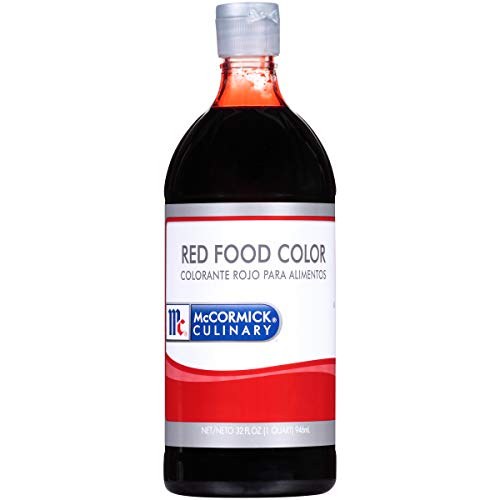
VIBRANT COLOR: McCormick Culinary Red Food Coloring is tasteless and adds a vibrant red color to any sweet indulgence

Consistent true red color
Roast and Baste Every 10 Minutes for Caramelized Edges
You’ll want to set consistent timer alerts so you don’t glaze too early or too late, because rushing this step leaves you with patchy, boring edges instead of that deep, lacquered look you’re after.
Build thick glaze layers by basting every ten minutes, letting each coat get tacky before adding more, sort of like layering nail polish except the payoff is crispy, sticky pork rather than chipped fingertips. Watch edges closely near the end, since sugar burns faster than you’d think, and a quick rescue flip beats scraping blackened bits off your masterpiece any day.
Recommended Products

【NON-TOXIC MATERIAL】 Made of pure stainless steel without any toxic coating, Our baking pan with grid rack will not release any chemical substances at high-temperature, No any coating will peel off, Healthy & Safe for your daily baking, Great replacement for aluminum and non-stick coating pans
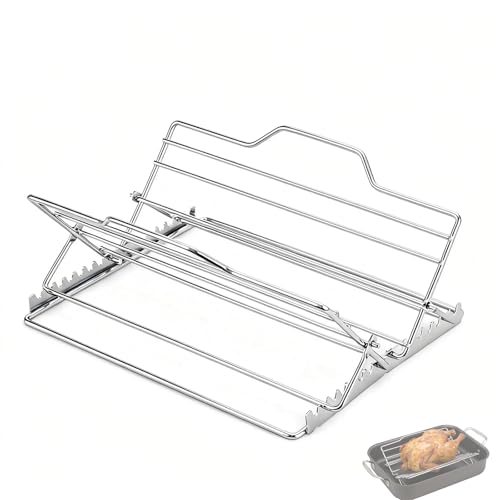
Premium Stainless Steel Construction - This stainless steel roasting rack for 9x13 pan is built to last, providing a durable and rust-resistant turkey roasting rack for your roasting pan, ensuring even cooking every time

Precise Dimensions: Measuring 13.5 × 21.5 cm / 5.3 × 8.5 in, this rectangular baking rack is a perfect fit for standard baking pans and trays, providing ample surface area for various foods
Set Consistent Timer Alerts
Without a kitchen timer, you’re basically gambling with your pork. Chinese BBQ demands precision, and you’ll make terrible Char Siu if you wander off and forget. Set two timers if you must, one for the oven and one in your pocket, because this recipe rewards nitpicks.
- Start hot: Blast at 425°F for 15 minutes to get that initial sear going.
- Baste at minute 10: Sauce goes on before the first flip, building that sticky coat Char Siu Bao dreams are made of.
- Keep the rhythm: Hit 20 and 30 minutes with fresh glaze, never skipping a beat.
- Finish strong: At the final heat boost, baste immediately. Use a meat thermometer to nail 145°F inside.
Dry pork is sad pork; yours won’t be.
Build Thick Glaze Layers
Timing’s locked in, now the real work begins: building that gorgeous, sticky glaze that separates decent Char Siu from the stuff worth bragging about.
Place the pork on a rack over a foil-lined sheet pan. Add water to the bottom of the pan to help prevent smoke and drippings from burning. Crank your oven to 425°F–475°F for browning, then dial down to 375°F so you don’t dry out the meat. After 10 minutes, brush on that thickened glaze, you’ve reduced your reserved marinade with honey or maltose, right?
Now baste every 10 minutes to build thick glaze layers. Flip and rotate halfway through so everything caramelizes evenly. Finish hot, 450°F or a quick broil, until your meat thermometer reads 145–160°F. Rest several minutes before cutting. That red food coloring you skipped? Won’t matter once you taste this.
Watch Edges Closely
Once you’ve got that rack set up with water in the pan, you’re ready to chase the real prize. This Char Siu demands attention, not extra cost. You’re building five layers of flavor here, so commit.
- Set your rhythm: Baste every 10 minutes so the glaze turns sticky and glossy, not dry and disappointing.
- Watch edges closely: They’ll darken faster than the center, and nobody wants burnt sacrifice instead of caramelized triumph.
- Use a meat thermometer: You’re aiming for 145–160 degrees F internal temperature of the pork for that perfect juicy bite.
- Finish strong: When the center’s close, give it another 15 minutes at reduced heat if the edges threaten to overtake you.
Roast pork this good makes the vigil worthwhile.
Pull at 140°F, Rest 10 Minutes, and Slice Against the Grain
When the thickest piece of pork hits 140°F on your instant-read thermometer, you’ll want to yank that char siu out fast, because carryover heat will push it higher while it rests.
Rest 10 minutes; this isn’t optional downtime, it’s when the magic happens. The glaze firms up instead of sliding off, juices settle back in, and the whole house smells incredible as that hot surface creates steam.
Now slice against the grain, perpendicular to those long muscle fibers, thin and with uniform thickness so every bite of your Chinese BBQ pork delivers that sticky, sweet glaze balanced with savory depth. Trust me, cutting with the grain ruins the texture. You’re basically asking for tough, stringy meat.
Recommended Products

Authentic Char Siu Seasoning Mix: NOH Chinese Barbecue Char Siu Seasoning Mix is a carefully crafted blend that brings the authentic flavors of Chinese BBQ to your kitchen; Designed to create a perfect char siu marinade for meats, it offers a convenient, easy-to-use solution for achieving a classic sweet and savory barbecue taste; For an extra touch of authenticity, mix the char siu seasoning with honey to create a beautiful, glossy glaze that enhances flavor and gives your meats that signature finish.

Enough to marinate 33lb of pork.
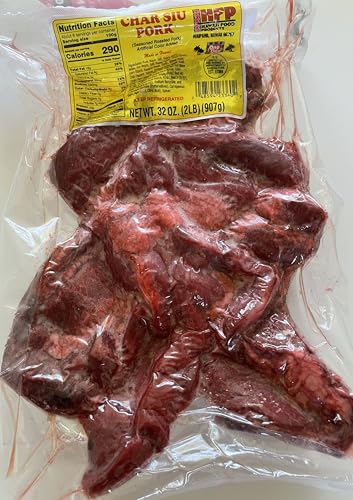
Char siu
Store Leftover Char Siu or Turn It Into Fried Rice and Pork Buns
You’ll probably end up with more char siu than you planned, and that’s not a bad problem to have.
Leftover char siu is the kind of problem that solves itself—deliciously.
- Let leftover char siu cool completely, then store it in an airtight container; keep it in the fridge up to 3 days, or freeze up to 3 months for backup.
- When you’re ready to eat, reheat gently so that gorgeous sticky glaze doesn’t turn into sad, dried-out leather.
- For Chinese BBQ pork fried rice, chop your leftovers into small bits and add into the final minutes; this keeps the meat tender and flavorful without overcooking it into rubber.
- Turn extra pork into char siu bao, those fluffy pork buns everyone fights over at dim sum, or try your hand at Chinese BBQ pork pineapple buns for something unexpected.
Recommended Products

Two 22 ounce bottles of Soy Vay Marinade and Sauce, Hoisin Garlic

Pack of six, 21-ounce bottles (total of 126-ounces)

WEEKNIGHT MEAL: Add Hoisin Garlic Marinade & Sauce to your favorite homemade meal for an easy weeknight dinner with four delicious flavors of sweet and salty tangy and garlicky; Package may vary