
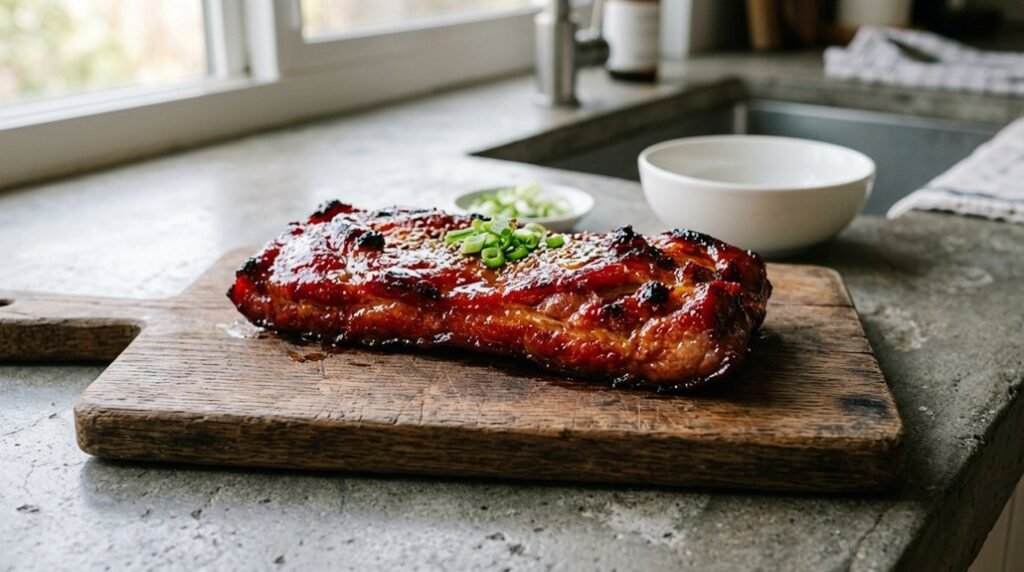


You’re staring at that glistening slab of char siu, wondering why it’s practically glowing red like a stop sign. Here’s the thing: that color isn’t from undercooked pork or weird chemicals. It’s from fermented red bean curd, a funky, salty ingredient that’s been flavoring Chinese meat for centuries.
Mix that with hoisin, soy sauce, and maltose, keep basting while it roasts, and you’ve built yourself a lacquered, burgundy crust that locks in juices and turns heads at the table.
Some spots cheap out with food coloring, sure, but the real deal? That’s tradition talking.
You deserve to know which is which before your next order, and honestly, the difference is night and day.
Fermented Red Bean Curd: Char Siu’s Original Red Secret
If you’ve ever wondered why authentic char siu carries that deep, almost burgundy glow, you’ll want to meet fermented red bean curd, the real OG of red pork. In Chinese cooking, you’re working with a powerhouse ingredient when you crack open that jar of crimson, funky cubes. The red bean fermentation doesn’t just paint your pork; it layers in savory depth that makes the meat taste like something, not just look pretty.
You’ll mash it into your hoisin-soy marinade, watching it dissolve into that signature paste. Then you’re roasting and basting until the glaze turns glassy and gorgeous. Sure, some cooks nowadays grab red yeast rice or straight food coloring, but you’re missing that complex, fermented punch if you skip the traditional stuff. Different brands hit different intensities, so you’re controlling color with every spoonful you add.
Recommended Products

Natural Fermentation & Golden Texture: Traditionally fermented for bright red, oily blocks with soft melt-in-mouth texture and umami-rich savory flavor

Wangzhihe Fermented Traditional Bean Curd 250g (Pack of 2)

Traditional Fermented Bean Curd -- Fermented red bean curd is made through traditional recipe and fermented naturally. It has a natural golden appearance, bright red and oily, neatly cut blocks, delicate and soft texture, melts in the mouth, and has a hint of umami in the salty taste
Why Char Siu’s Bright Red Color Is Completely Safe
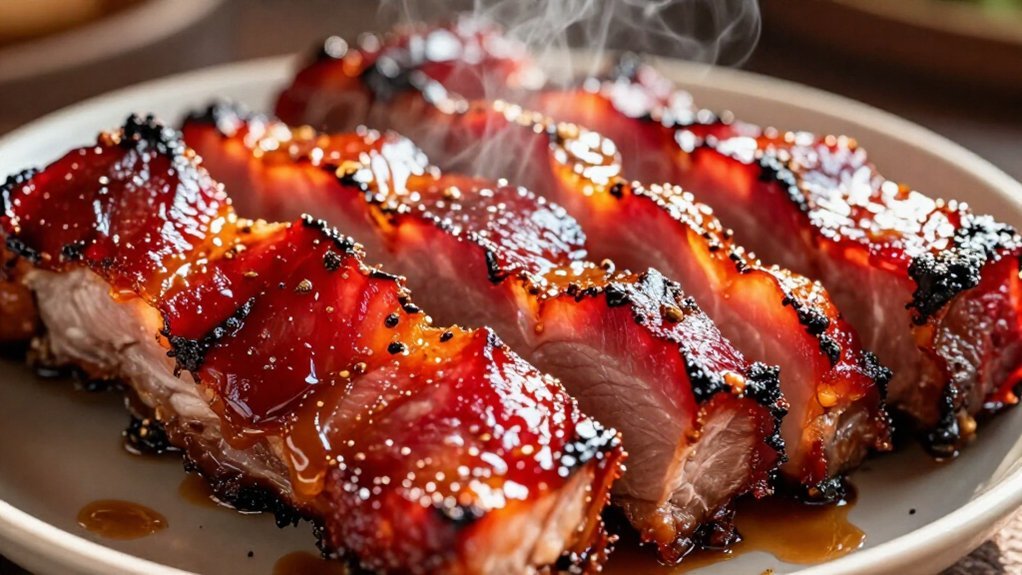
You might think that shocking red pork looks suspiciously raw, but you’re actually seeing the safe, beautiful work of natural pigments like fermented red bean curd and red yeast rice, which have colored Chinese BBQ for centuries without any tricks. These traditional ingredients aren’t just pretty faces. They’re time-tested staples that caramelize and set during roasting, so the meat gets fully cooked while keeping that iconic ruby glow.
Even when modern cooks swap in food coloring for convenience, you’re still getting properly roasted pork. The color’s just makeup for the outside, not a scam pretending the meat is done.
Recommended Products

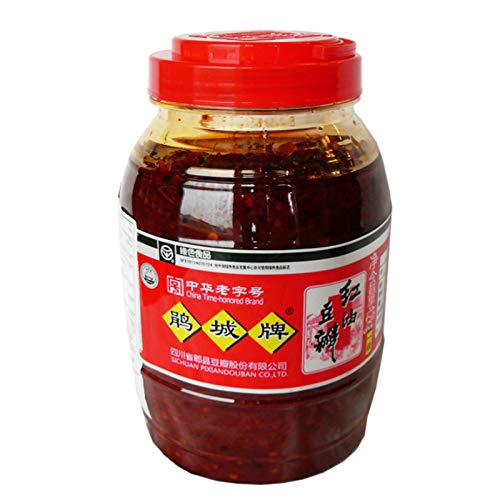
a must-have ingredient for most Sichuan Cuisine dishes including Mapo Tofu, Hui Guo Rou and Hong Shao Rou

Enough to marinate 33lb of pork.

Authentic ingredients: Made primarily from fresh red chili peppers and broad beans from Pixian County, Sichuan Province, combined with flour and salt through fermentation, adhering to traditional recipes to ensure authentic flavor.
Natural Coloring Sources
When you bite into that glistening slab of char siu at your favorite Cantonese spot, that electric red color might make you wonder what you’re actually eating, and honestly, that’s fair, because plenty of cheap takeout joints just dump in artificial dye without a second thought.
You’ll find better methods in traditional kitchens. Red fermented bean curd, basically fermented tofu packed with natural crimson pigments, stains the pork beautifully as it roasts. Some cooks swear by red yeast rice powder instead, where fermentation creates that vivid color before it ever hits your marinade.
These aren’t shortcuts; they’re time-tested. Hoisin and other barbecue sauces add depth, while maltose builds the glossy finish. Skip the red food colouring entirely. You’ve got smarter, tastier options that don’t ask you to compromise.
Traditional Ingredient Safety
That glistening scarlet coating on proper char siu isn’t trying to trick you, it’s earned. You’re looking at centuries of Cantonese know-how, where red fermented bean curd or red yeast rice does the heavy lifting. These fermented ingredients develop their crimson pigments naturally, no shady shortcuts involved.
You might spot food coloring in some recipes, sure, but that’s optional, the traditional route favors those earthy, funky fermented sources. The color screams “raw” to untrained eyes, yet you’re eating pork roasted well past 145°F, fully safe and succulent. Trust the process: that hue comes from your marinade’s red fermented bean curd or red yeast rice working alongside hoisin and soy, not from undercooked meat. You want authentic? Skip the dye, grab the fermented stuff.
Modern Kitchen Alternatives
How do modern cooks nail that eye-popping crimson glaze without a drop of artificial dye? You’re seeing fermented red bean curd, that’s the secret weapon. This traditional Chinese ingredient, plus red yeast rice, delivers that gorgeous red naturally, no sketchy shortcuts needed.
Want your kitchen to match those restaurant results? Here’s your plan:
- Grab fermented red bean curd from any Asian market, it’ll change your marinade.
- Mix in red yeast rice powder for earthy, food-grade color that beats synthetic stuff.
- Combine hoisin, maltose, and Chinese wine for glossy, caramelized depth.
- Roast properly so your red char siu is fully cooked, the color’s just sauce doing its job.
Stop worrying, that bright red comes from smart ingredients, not undercooked pork. You’ve got this.
Red Yeast Rice vs. Food Coloring: What Restaurants Actually Use
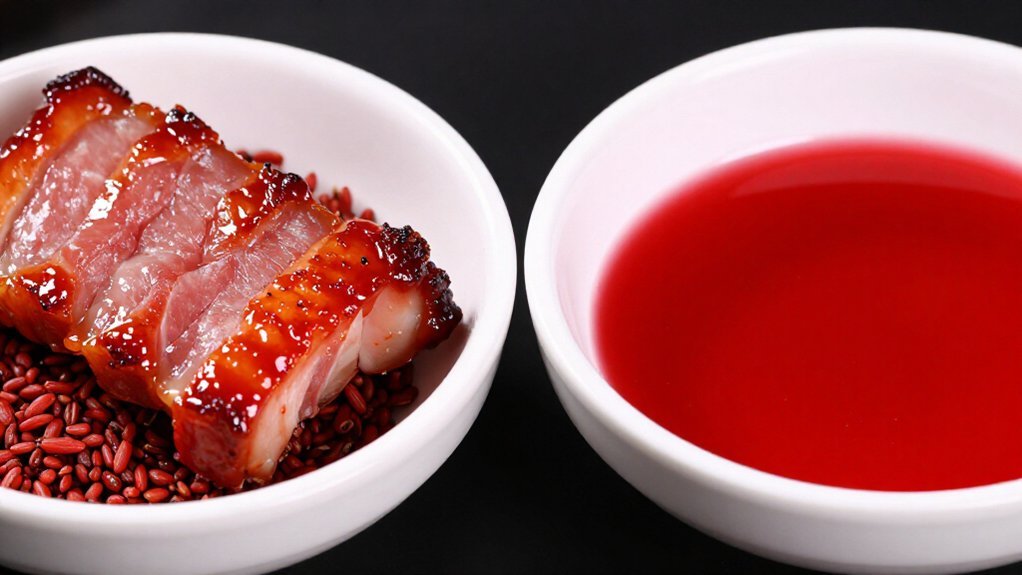
You might assume every restaurant reaches for red yeast rice, that fermented grain with its earthy, wine-like tang, but you’d be wrong. Most spots actually grab cheap liquid dye because it hits the exact same crimson every single time without any batch-to-batch guesswork.
I get why they do it: consistency keeps customers happy and costs down, though I can’t deny feeling a little let down when I learn my glossy char siu got its glow from a squeeze bottle rather than tradition. That said, some kitchens still swear by the natural stuff, accepting the pigment variation and higher price for a flavor depth you just don’t get from synthetic reds.
Recommended Products

Authentic Char Siu Seasoning Mix: NOH Chinese Barbecue Char Siu Seasoning Mix is a carefully crafted blend that brings the authentic flavors of Chinese BBQ to your kitchen; Designed to create a perfect char siu marinade for meats, it offers a convenient, easy-to-use solution for achieving a classic sweet and savory barbecue taste; For an extra touch of authenticity, mix the char siu seasoning with honey to create a beautiful, glossy glaze that enhances flavor and gives your meats that signature finish

Authentic Char Siu Seasoning Mix: NOH Chinese Barbecue Char Siu Seasoning Mix is a carefully crafted blend that brings the authentic flavors of Chinese BBQ to your kitchen; Designed to create a perfect char siu marinade for meats, it offers a convenient, easy-to-use solution for achieving a classic sweet and savory barbecue taste; For an extra touch of authenticity, mix the char siu seasoning with honey to create a beautiful, glossy glaze that enhances flavor and gives your meats that signature finish

Classic Chinese BBQ – Lee Kum Kee Char Siu Sauce is specially crafted to deliver the signature honey-sweet flavor of traditional Chinese Barbeque Pork (Cha Siu). Its rich, authentic taste captures the essence of classic Cantonese cuisine, making it a must-have for recreating restaurant-quality dishes at home.
Traditional Natural Coloring
When you bite into a bright slab of char siu at your favorite takeout spot, you’re probably tasting red yeast rice or fermented red bean curd, not some lab-made dye. These traditional methods give roast pork its signature crimson glow while adding subtle depth you can’t fake with chemicals.
Here’s what you’re actually getting with natural coloring:
- Red yeast rice delivers a muted burgundy hue and earthy, slightly sweet undertones.
- Fermented red bean curd packs punchier color with salty, umami complexity.
- Neither option burns or turns orange under high heat, unlike cheap dyes.
- Both require patience, skill, and decent supply chains, which is why some kitchens quietly swap them out.
You can taste the difference. Real traditional char siu carries whispers of fermentation, that funky depth coloring alone can’t achieve.
Modern Commercial Alternatives
Although your neighborhood spot might claim they’re keeping it old-school, chances are they’re reaching for the food coloring bottle when the lunch rush hits. You’ll find red yeast rice offered as the “natural” upgrade, and honestly, it delivers: a muted crimson plus faint fermented depth that beats flat artificial dyes. Still, food coloring wins on reliability. Batch three looks exactly like batch three hundred, while yeast rice shifts with humidity and fermentation strength.
Most kitchens hedge their bets, blending hoisin sauce with whichever red agent they’ve got, then basting obsessively with maltose until the pork gleams like candy. That sticky glaze, not the dye itself, fools your eye into thinking you’re eating tradition. Smart? Maybe. Authentic? You’re tasting theater, not history.
How Hoisin and Soy Sauce Build Char Siu’s Color
Because you’re building a marinade that needs to look as good as it tastes, hoisin and soy sauce do way more heavy lifting than most people realize. You’re not just adding flavor; you’re painting your BBQ pork with chemistry.
Here’s what happens when you mix them:
Hoisin brings the sweet, soy brings the salt; together they paint your pork with chemistry.
- Hoisin brings the sweetness and thick, caramel-like sugars that brown into that gorgeous reddish-brown crust.
- Soy sauce adds salt and depth, triggering Maillard browning that makes the glaze look rich, not flat.
- Together they create a dark, sticky base, though honestly, they’ll only get you so far toward that fire-engine red.
- Repeated basting sets everything into a shiny lacquer, locking in the color you’ve built.
Sure, hoisin and soy sauce won’t give you the brightest red alone, but they’re the unsung heroes keeping your char siu from looking pale and disappointing.
Recommended Products

Selected from High-Quality Red Yeast Rice Hong Qu Mi 红曲米

Selected from High Quality Red Yeast Rice 紅曲米

Fresh & New
Making Char Siu Red at Home: Natural and Easy Methods
Skip the food coloring, grab a jar of fermented red bean curd from your local Asian grocery, and you’ll finally nail that restaurant-worthy crimson without feeling like you’re eating science experiment leftovers. This funky, salty paste, made from fermented soybeans, stains your pork shoulder a deep, convincing red while adding subtle umami depth.
You’ll want to mash a cube or two into your marinade, maybe toss in a pinch of red yeast rice powder if you’re feeling fancy. Hoisin sauce already brings some ruddy darkness to the party, so you’re building layers, not just slapping on paint. Start small with that bean curd, taste as you go, brands vary wildly.
Caramelize that glaze properly with maltose or honey, and your char siu bao filling will look straight out of a Chinatown window. Natural color actually tastes better, who knew?
Recommended Products

Natural Fermentation & Golden Texture:Fermented red bean curd is made through traditional recipe and fermented naturally. It has a natural golden appearance, bright red and oily, neatly cut blocks, delicate and soft texture, and has a hint of umami in the salty taste.

★Traditional Fermented Bean Curd – Naturally Fermented:This traditional red bean curd is made using an authentic recipe and naturally fermented. The cubes are neatly cut with a bright red, glossy appearance. The texture is delicate and smooth — it practically melts in your mouth, with a savory, slightly salty flavor and a hint of umami.

Authentic Chinese red fermented tofu, crafted with traditional recipes for rich, savory and mellow flavor, a classic Asian condiment for daily meals.
Why Char Siu Looks Softer Red in Some Restaurants
Not all char siu wears the same coat of red, and you’ve probably noticed some restaurant versions look almost pillowy soft in their color, like someone wrapped the pork in velvet rather than paint. You’ve wondered how they pull off that lush, gentle hue while your home attempts turn out patchy or harsh.
Here’s what separates professional Cantonese roast meat from amateur hour:
They glaze repeatedly with hoisin, fermented red bean curd, and maltose or honey, building layers that caramelize into smooth lacquer instead of burnt crust. They pick fattier pork shoulder that stays tender while the glaze firms, so the red looks moist, not dried out. They roast over water-filled trays, taming harsh browning that would darken your traditional Chinese masterpiece. They sometimes cheat with extra red dye, which you might find cheap but undeniably effective, that saturated pillow-look you’re chasing.
Recommended Products

SEMPIO TOJANG PREMIUM DOENJANG WITH RED CHILI PEPPER (15.9oz) - Our premium Sempio Tojang is a savory type of fermented soybean paste, enhanced with red chili pepper powder and seafood seasoning. This authentic Korean soup base offers rich umami and complex spicy-savory flavors.
What Char Siu Color Reveals About Cooking Method
You’ve seen how restaurants manipulate that pillow-soft red, but now you’re wondering what the color itself actually tells you about how the pork was cooked. In Chinese cuisine, that crimson exterior speaks volumes about technique.
When you spot genuine Chinese BBQ pork with a deep, almost jewel-toned red, you’re likely looking at red bean curd in the marinade doing its work, not some cheap dye job. The color intensity reveals how aggressively the cook basted during roasting; that sticky, caramelized surface comes from repeated glazing with maltose or honey.
Pale, washed-out pink? Someone rushed the process or skipped the fermented ingredients entirely. A proper char siu color shows you the meat absorbed its marinade fully and the sugars carbonized beautifully on the outside.
Recommended Products

Authentic Char Siu Seasoning Mix: NOH Chinese Barbecue Char Siu Seasoning Mix is a carefully crafted blend that brings the authentic flavors of Chinese BBQ to your kitchen; Designed to create a perfect char siu marinade for meats, it offers a convenient, easy-to-use solution for achieving a classic sweet and savory barbecue taste; For an extra touch of authenticity, mix the char siu seasoning with honey to create a beautiful, glossy glaze that enhances flavor and gives your meats that signature finish

Authentic Char Siu Seasoning Mix: NOH Chinese Barbecue Char Siu Seasoning Mix is a carefully crafted blend that brings the authentic flavors of Chinese BBQ to your kitchen; Designed to create a perfect char siu marinade for meats, it offers a convenient, easy-to-use solution for achieving a classic sweet and savory barbecue taste; For an extra touch of authenticity, mix the char siu seasoning with honey to create a beautiful, glossy glaze that enhances flavor and gives your meats that signature finish.
Net Wt. 14 fl. oz.
Char Siu Too Pale? How to Fix the Color
Why does your char siu look more like tired cafeteria ham than that gorgeous restaurant red? You’re probably skimping on the color boosters that make Chashu Pork legendary. Here’s how you fix it:
- Add red fermented bean curd or red yeast rice to your marinade, or use food coloring like traditional cooks do; you’re building that signature crimson base.
- Don’t skip the hoisin, it’s your glossy secret weapon, plus overnight soaking (8+ hours) lets the pork drink in deep tones.
- Baste with warmed maltose or honey after 40 minutes of roast time, that sticky glaze caramelizes and makes reds pop darker.
- Keep roasting until caramelized, about 50 minutes total, flipping at 25 minutes. Pale meat means weak color sources or rushed prep, and nobody wants that disappointment.
Recommended Products

Rich in Natural Nutrients: Step into a world where every serving is a treasure chest of essential nutrients sourced directly from nature. Our Organic Red Yeast Rice powder harnesses the earth's bounty, providing you with the essential nutrients required for a flourishing overall health and well-being.

Rich in Natural Nutrients: Step into a world where every serving is a treasure chest of essential nutrients sourced directly from nature. Our Organic Red Yeast Rice powder harnesses the earth's bounty, providing you with the essential nutrients required for a flourishing overall health and well-being.

Rich in Natural Nutrients: Step into a world where every serving is a treasure chest of essential nutrients sourced directly from nature. Our Organic Red Yeast Rice powder harnesses the earth's bounty, providing you with the essential nutrients required for a flourishing overall health and well-being.