

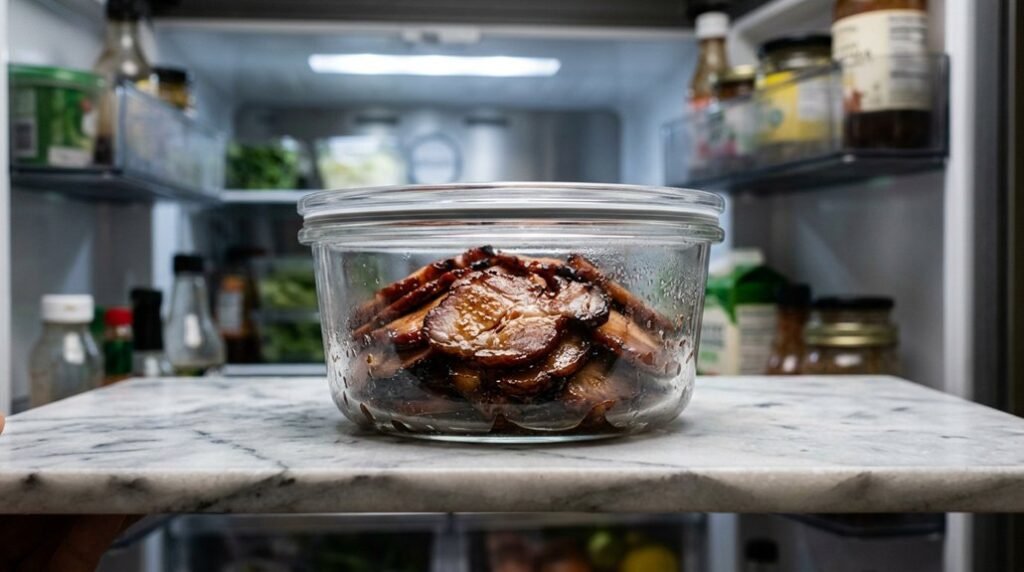


Last Tuesday, you spent eight hours smoking a pork shoulder, and now you’re staring at three pounds of leftovers wondering if it’s still safe.
You already know the basics: refrigerate within two hours, keep it at 40°F or below, and you’ve got a narrow window.
But here’s where it gets tricky.
Some sources swear by seven days, while food safety experts draw a hard line at three to four.
The texture changes faster than you’d think, that bark softens, and the smoky flavor starts fading by day two.
You’re about to learn why trusting your nose isn’t enough, and which storage mistakes could cost you more than just dinner.
How Long Does Pulled Pork Last in the Fridge?
When you’ve spent all day slow-smoking a beautiful pork shoulder, the last thing you want is to waste a single bite, so let’s talk about how long you can actually keep that pulled pork in the fridge before it turns sketchy.
You’ll get about three days of safe storage, maybe four if your fridge runs cold and you’ve packed that meat right. Stick it in an airtight container, squeeze out the air, and keep it at 40°F or below.
Some folks push to seven days, but that’s risky territory where bacteria throw a party. By day two, you’ll notice the flavor’s already losing its spark, that smoky richness fading like cheap cologne.
Risky territory where bacteria throw a party, and that smoky richness fades like cheap cologne.
Want my honest take? Freeze it by day five if you haven’t devoured it. Vacuum sealing locks in taste way better than hoping your fridge performs miracles.
Recommended Products


PREVENTS SPOILAGE AND MESS: Get bacon out of its package and into fresh storage. The Stay Fresh bacon keeper holds a 16 ounce slab in a compact, top opening container. Does away with the need for storage bags, saving on plastic waste

CUSTOMER SUPPORT: Our team is dedicated to providing high-quality products and support for all users. If you have any questions regarding your purchase or product performance, we are available to assist with any inquiries to ensure a positive experience
The 2-Hour Rule: Why It Defines Your Storage Timeline
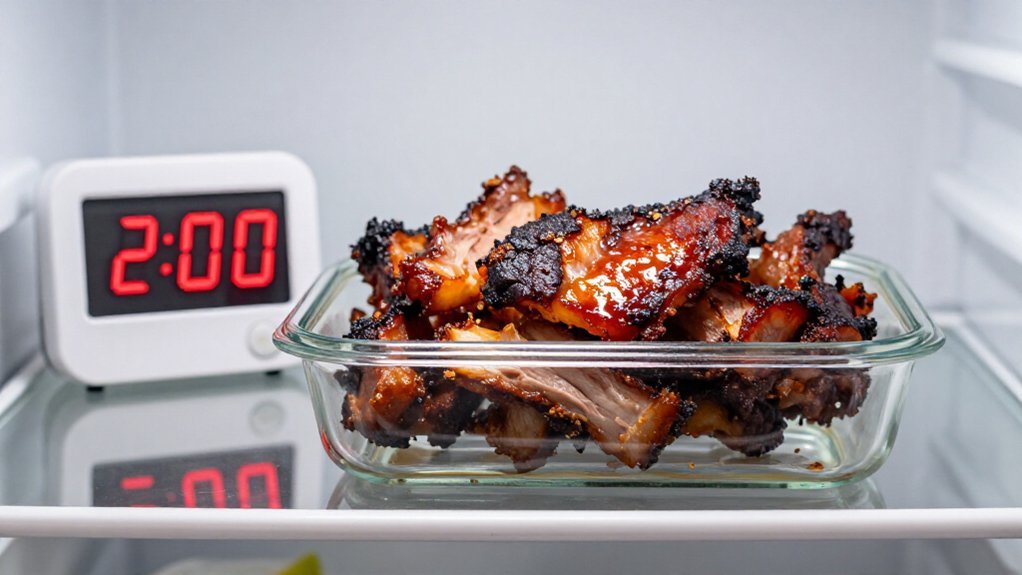
Most backyard pitmasters don’t realize they’re already racing the clock the moment their pork comes off the smoker, and that’s where the 2-hour rule either saves your batch or sets you up for trouble. You’ve got a tight window, just two hours to get that meat below 40°F, or one hour if you’re sweating through a 90°F summer cookout.
Here’s the real problem: the danger zone between 41°F and 135°F is basically a bacteria playground. Those microbes can double every twenty minutes, turning your beautiful bark into a food safety nightmare.
Waiting longer won’t work, reheating tricks you, since it kills some bugs but not the toxins they’ve already made. Cool fast in shallow containers, seal them tight, and you’re good.
Recommended Products

PREVENT CROSS CONTAMINATION: This meat marinating container with lid features color coded red and white trays that nest together for transporting raw marinated meat and cooked food separately helping prevent cross contamination while grilling

Fridge Storage Reality: 3–4 Days or 7? Experts Weigh In
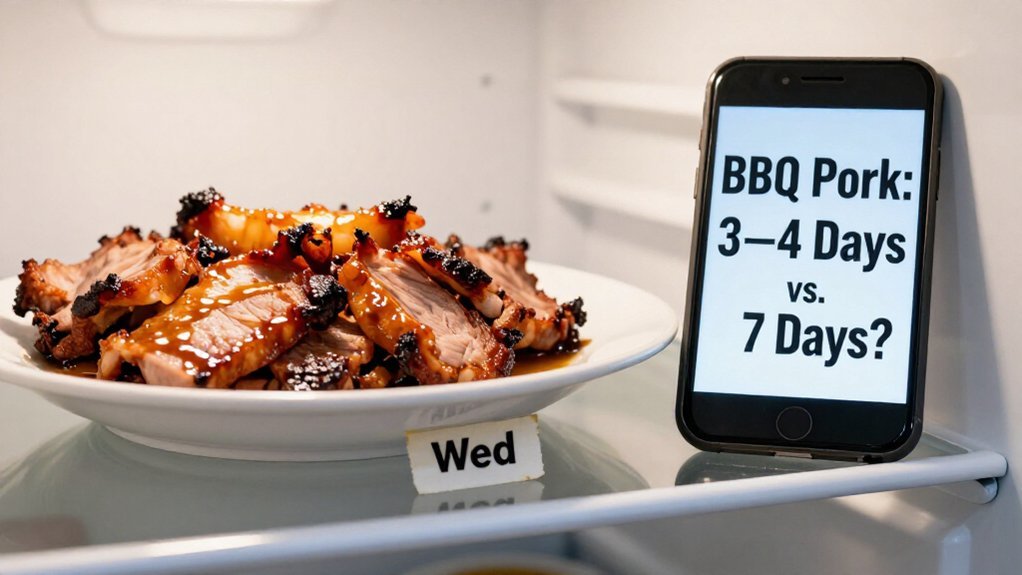
The fridge-storage debate splits pitmasters into two camps: the cautious crowd who treat that USDA 3–4 day guideline like gospel, and the bold souls who’ll stretch their pulled pork to a full week without blinking.
You picture steam rising as you shred that shoulder fresh off the smoker. You watch the clock, knowing you’ve got two hours to get that cooked pork fridge within safe temperatures. You see condensation beads forming on a shallow container, heat escaping fast so bacteria can’t party.
You imagine day seven: maybe it smells fine, but your gut knows pork safe is about probability, not superpowers. That 7-day stretch assumes perfect cold storage and flawless handling; most home kitchens don’t deliver. Play it smart. Four days keeps you confident, not queasy.
Recommended Products
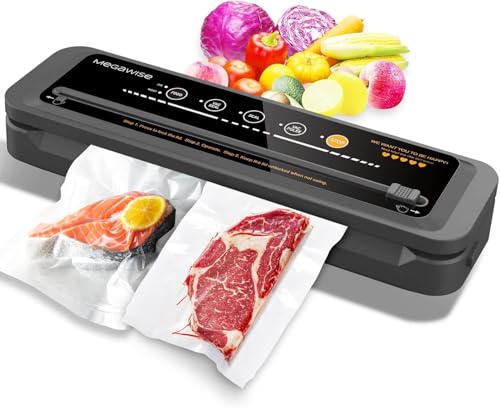
80kPa Suction Power: Updated 2025 vacuum sealer uses a DC motor pump with electromagnetics and pure copper for enhanced suction power. It sucks all air out tightly to preserve your meat and vegetables for 10 times longer or more to prevent oxidation and keep things fresh. Updated version solved many issues found from previous version

Works with All Desktop Vacuum Sealers: These vacuum sealer bags are designed to work with all large desktop vacuum sealer machines. (Notice: The precut bags have no zipper or air valve and cannot be used with handheld vacuum sealers.)
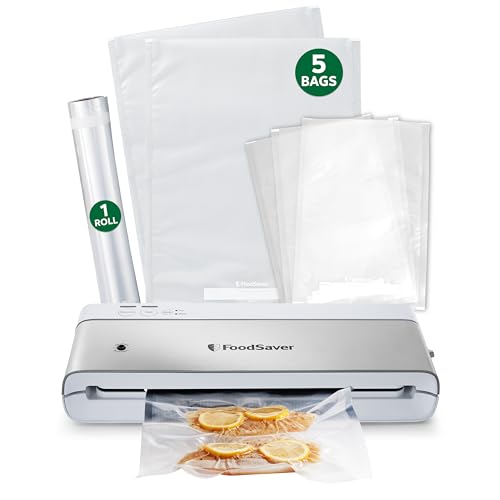
Extended Freshness: Keeps food fresh in the freezer up to 5x longer
Cool Pulled Pork Fast Without Drying It Out
After pulling that pork off the smoker, you’ve got a narrow window to beat the bacteria, and rushing it wrong turns your juicy masterpiece into shoe leather. You’ve got two hours max to cool cooked pulled pork and get it into the fridge, one hour if it’s hovering above 90°F. That danger zone between 40°F and 140°F is where bacteria throw a party, so speed matters.
Skip the giant tub; shallow airtight containers are your friend here. They let heat escape fast, keeping your pork moist instead of steam-cooking itself into sadness.
Mix in saved juices before storing, it locks in flavor that otherwise vanishes after day two. Keep your fridge at 40°F or below, and you’ll squeeze three to four decent days out of it. Small portions cool quicker, so divide that mountain of meat wisely.
Recommended Products

What's Included in the Package: you will receive 4 pieces of deli meat containers overall, enough quantities to allow you to place different food, or you can share them with your neighbors

【All-in-One Grill Prep System】This complete 5 in 1 grilling tray set includes a deep marinating pan, a shallow serving tray, a stainless steel lid, a metal cooling rack, and a reversible cutting board. From kitchen to grill, everything is covered in one box – from storage, preparation, marinating and serving food. Perfect for backyard BBQ, camping, roasting and etc,.

DURABLE AND LONG-LASTING: Our Deli Meat and Cheese storage container, is made from sturdy plastic so it withstands the test of time. With a size of 11” x 6.5” x 2”, a strong closing buckle and smooth hinges, this meat and cheese saver container is perfect for keeping your meat and cheese fresh and your fridge organized.
Freezer vs. Fridge: When to Switch Your Pulled Pork Storage
You’ll know it’s time to move your pulled pork when you hit that 3–4 day mark in the fridge, especially if you’re noticing any slight dulling of smell or texture; that’s your cue to freeze or eat up.
Smart home cooks actually plan for this from the start, portioning meat into half-pound bags so you’re not thawing a giant brick later, and honestly, vacuum-sealing before freezing at day two or three beats crying over dry, freezer-burned pork a month down the road.
Sure, frozen pork stays safe forever at 0°F, but you’ll want to use it within 2–3 months if you actually care about taste, because nobody’s excited for BBQ that’s turned into flavored ice crystals.
Recommended Products

Package Content: You will receive 2 sets of deli storage boxes, and each set contains 3 boxes, which can meet your daily storage needs for different kinds of food. The boxes adopt a transparent design, allowing you to clearly see the internal food without opening the lid, making it convenient to check the food stock at any time. It should be noted that this deli container is not suitable for working in high-temperature environments.

Dishwasher Safe: Our stackable deli meat storage containers are dishwasher safe for effortless cleaning. Keep your lunch meat storage container for fridge spotless with a quick wash, saving you time and hassle

♛Extended Freshness♛: Our Bacon Container/Deli Meat Container Features An Innovative Design With Improved Sealing, Keeping Your Food Fresher For Longer. The Raised Pattern At The Bottom Minimizes Contact Between Food And The Container's Base, While Separating Food From Water For Optimal Storage Conditions.
Fridge Limit Signs
How can you tell when your leftover pulled pork has overstayed its welcome in the cold drawer? You watch for fridge limit signs that tell you pork stays safe only so long before harmful bacteria take over.
You press the meat; it feels slimy or tacky, like wet cardboard left in the sun. You lean in close; a sour, ammonia-like sting hits your nose, not that smoky sweetness you remember.
You count the days; four ticks past cooking and you’re gambling with your gut. You recall the counter; did it sit out past two hours? If yes, that pork’s done.
Don’t play hero with reheating. When these signs show up, you toss it. Freezing earlier would have saved it, but now it’s trash.
Freezer Timing Strategy
Since you can only keep that pulled pork in the fridge for about three to four days before things get sketchy, you’ve got to make a call: eat it fast or freeze it smart. Your freezer timing strategy really kicks in around day four or five, when quality starts sliding but safety still holds. Don’t push your luck; freezing won’t rescue pork that’s already turned.
Grab a sealed bag, preferably vacuum-sealed if you’ve got one. Portion it into half-pound chunks, label with the date, and squeeze every bit of air out. That’s your defense against freezer burn, that nasty, dry, gray crust that ruins texture and taste.
Frozen right, your pork stays prime for two to three months. Thaw it in the fridge, reheat hot, and you’re golden.
Quality Preservation Tips
By day three, your pulled pork‘s sitting at a crossroads, and you’ve got to make a call. That cooked meat still hits safe internal temperature in the fridge, sure, but the magic’s fading fast. Here’s what you’re dealing with:
The bark softens into sad, soggy leather. The smoke flavor ghosts you like a bad ex. The fat turns greasy, pooling in unappetizing puddles. The texture goes stringy, like overcooked cafeteria mystery meat.
Switch to the freezer by day three, four tops. Portion it into meal-sized bags, squeeze out air, and freeze immediately. Vacuum sealing’s your best bet; honestly, it locks in moisture like a champ. Thaw overnight in the fridge, reheat until steaming, and enjoy.
Does Vacuum Sealing Extend Pulled Pork’s Fridge Life?
Although vacuum sealing pulled pork feels like you’re giving it a superpower, the truth is a bit disappointing: it doesn’t actually buy you extra time in the fridge. Bacteria keep growing whether you’ve used a vacuum sealer or not, so you’re still stuck with that 3–4 day window at 40°F or below.
Sure, the seal looks impressive, like you’ve locked in freshness forever, but it’s mostly theater. Where you’ll actually win is freezer protection. If you seal that pulled pork tight and stash it at 0°F, you’ve dodged freezer burn and bought yourself months of quality, not just weeks.
The real move? Seal it by day two, then get it frozen. Don’t try pushing fridge limits, no matter how fancy your bag looks.
How to Thaw Frozen Pulled Pork Safely
Now that you’ve sealed that pulled pork and tucked it into the freezer, you’re going to need a plan for getting it back out without wrecking hours of smoky work. You thaw frozen pulled pork safely using three solid methods, and frankly, some are smarter than others.
Getting that pulled pork out of the freezer means having a plan—some thawing methods are simply smarter than others.
- Fridge thawing: You transfer the meat to the refrigerator overnight, keeping it at 40°F/4°C or below. It’s slow but bulletproof.
- Cold water bath: You submerge the sealed bag in cold water, swapping it every 30 minutes. Budget about one hour per pound.
- Microwave defrost: You hit defrost mode at 30% power, then cook immediately since parts hit that 40°F–140°F danger zone.
Never thaw at room temperature; bacteria love that playground. Once thawed, you’ve got 3–4 days to eat. Reheat until steaming hot, and don’t let it linger out. That’s how pork are safe.
Recommended Products

Works with All Desktop Vacuum Sealers: These vacuum sealer bags are designed to work with all large desktop vacuum sealer machines. (Notice: The precut bags have no zipper or air valve and cannot be used with handheld vacuum sealers.)

HEAVY DUTY AND PUNCTURE PREVENTION - 150 pack of 6 by 10 inch and 8 by 12 inch precut bags with embossed channels to increase suction, 300 pack in total, with a box for storage, keep fresh without freezer burn or dehydration.

Works with All Desktop Vacuum Sealers: These vacuum sealer bags are designed to work with all large desktop vacuum sealer machines. (Notice: The precut bags have no zipper or air valve and cannot be used with handheld vacuum sealers.)
Reheating Pulled Pork: Safe Methods From Fridge or Freezer
Whether you’re pulling it straight from the fridge or rescuing it from the frozen grip, reheating pulled pork the right way makes the difference between a moist, smoky revival and a sad, stringy disappointment. You’ve got to reheat pulled pork gently, never blasting it on high heat; that just murders the texture. Stick to low or medium stovetop warmth, or nuke it in a microwave-safe dish with a splash of broth. Patience pays off.
If you tucked it away within two hours of cooking, you’re good for about four fridge days. Miss that window, and you’re rolling dice with bacteria; no reheating fixes that.
For frozen stashes, thaw overnight in the fridge first, or boil the sealed bag ten minutes. It won’t be safely refrozen after thawing though, so portion smart.
Recommended Products

Extra-Large Capacity: The deep, spacious interior holds up to three one-pound packages of sliced bacon, several trays of deli meat, or a full family-size block of cheese, replacing the mismatched deli drawer clutter with a single organized container.

[MEASUREMENTS]: 17cm x 3,2cm x 25,2cm
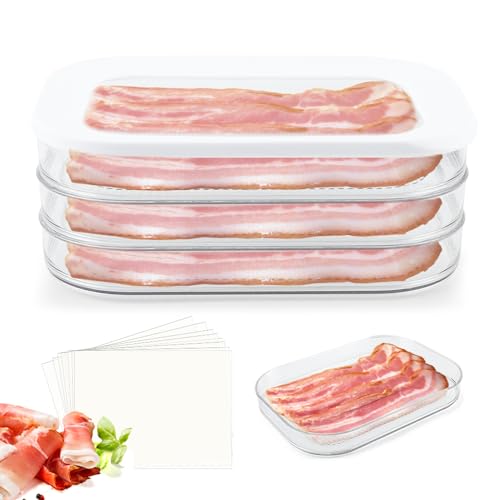
Check Size, Capacity, and Use Limits Before Ordering: Container size is about 8.86 x 6.3 x 3.35 in. Each layer holds about 550 mL, with 1650 mL total. Designed for refrigerated storage only. Not for microwave, oven, air fryer, dishwasher, or hot foods. Includes 1 container and 50 baking paper sheets
5 Ways to Tell Your Pulled Pork Has Turned
Once you’ve got your reheating routine down, the next hurdle’s knowing when your pulled pork’s crossed over from treasured leftover to trash-bound liability. Spotting signs of spoilage early keeps you ahead of bacterial growth that you can’t always see or smell at first.
Knowing when your pulled pork’s crossed over from treasured leftover to trash-bound liability keeps you ahead of bacterial growth you can’t always see or smell.
Sniff hard: You’ll catch sour, sulfurous, or ammonia-like odors that scream “compost,” not dinner.
Feel the surface: Tacky slime or slipperiness means spoilage has settled in; moist is fine, slick is not.
Scan the color: Gray-green casts or weird dullness signal trouble, even if BBQ sauce tries hiding it.
Check the package: Bloated vacuum seals or leaky containers are basically bacterial growth balloons.
Even without obvious warnings, trust the 3–4 day rule to decide what’s actually safe to eat.
Recommended Products

✔2 Pack - Rectangular plastic food storage containers helps bacon fresh.

Bacon Storage Solution: Our bacon container for refrigerator will keep your deli / bacon / cheese with optimal freshness. Don't have your fridge dirty again from the ripped cold-cut bag.
What to Do With Leftover Pulled Pork Before Day 4
You’ve got maybe three days before your pulled pork starts losing its mojo, so you’ll want to act fast. Portion it into bags right away, that way you’re not cracking open a big container every time you want a sandwich and letting air wreck what’s left.
Plan your freezer meals now, maybe earmark some for tacos or nachos later, and slap a date on every package because you’ll forget, trust me, and nothing’s worse than finding mystery meat from who-knows-when.
Portion Into Bags
Because you’re racing against the clock with leftover pulled pork, portioning it into small freezer-safe bags before day 4 hits is honestly the smartest move you’ll make. You grab a freezer bag, scoop about half a pound per portion, and suddenly you’ve got grab-and-go meals instead of a frozen brick. Unlike raw pork, cooked meat freezes well when you act fast.
Here’s what you’re actually doing:
- You flatten each bag so it stacks like a deck of cards in your freezer
- You squeeze out air until the meat hugs the plastic like a second skin
- You scribble the date sharpie-bold so nothing gets buried and forgotten
- You slide bags into the cold before quality starts its sad downhill slide
Vacuum sealing’s better, but honestly, a tight freezer bag works fine if you’re quick about it.
Plan Freezer Meals
Map out exactly how you’ll use that pork before it hits day 4, because that’s where most folks trip up. You’re staring at leftover pulled pork within that 3 to 4 day window, and honestly, freezing now beats gambling on fridge life later.
Smart move: portion that pork into half-pound or one-pound packs, cool it fast in shallow containers, then freeze. You’ll dodge the 40–140°F danger zone completely, keeping everything food safe without second-guessing yourself later. Vacuum sealing around day 3, if you’ve got a FoodSaver, locks out freezer burn that turns good meat into dry disappointment.
Your freezer meals stay quality-best for about 2 to 3 months at 0°F, though they’ll stay safe longer. When hungry, thaw those packs in the fridge, never on the counter, then reheat to steaming hot.
Track Storage Dates
Tracking your pulled pork’s fridge life always starts with one simple move: grab a marker and write the date right on the container before it even hits the shelf. You’re not guessing anymore; you’re in control. Track storage dates like a pro, because that pork lasts only 3–4 days at 40°F or below. Day one starts when it hits the fridge, not when you pulled it off the smoker.
Here’s what sharp tracking looks like:
- You spot the Sharpie, scribble “FRI 6/9” in bold letters, no question marks
- You stack containers like poker chips, oldest up front, ready to grab
- You open the fridge Wednesday morning, see Tuesday’s date, feel the clock tick
- You seal half-pound packs for the freezer by day three, because shelf life doesn’t negotiate
Don’t push it to day seven unless you enjoy gambling with dinner.